

Hot Products
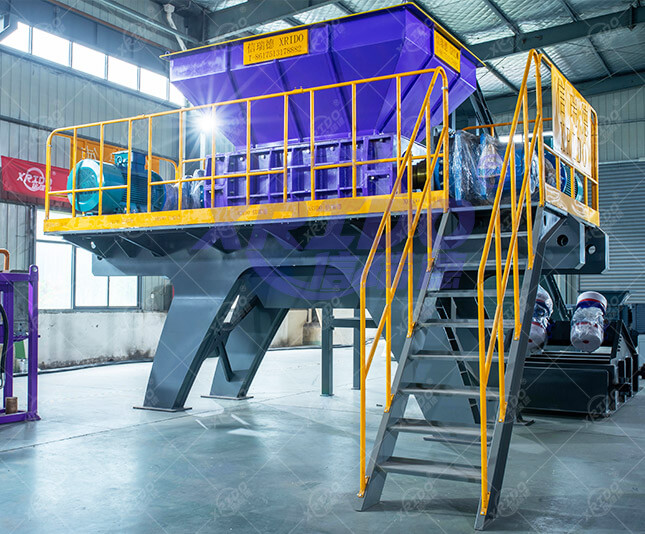
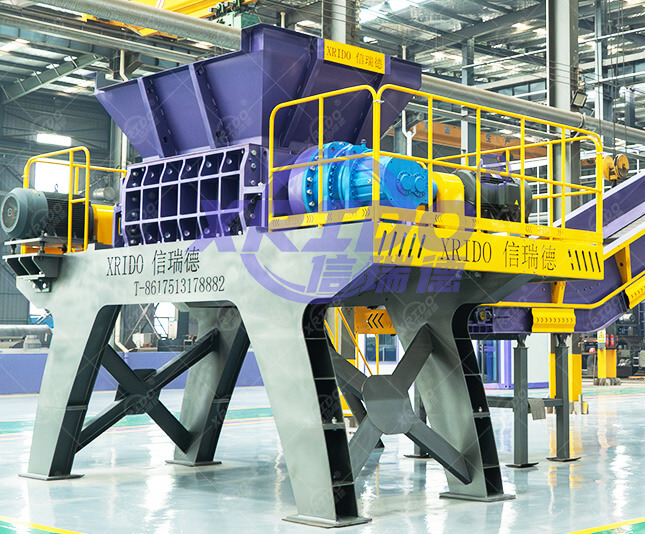
Customer Site of Waste Bicycle Crushing and Sorting Line
In a large-scale recycling park, a dedicated waste bicycle crushing and sorting line is operating efficiently. This line precisely handles the intermediate material—bicycle frames after tire removal—and transforms mixed urban solid waste into high-purity recycled raw materials through a combination of crushing, magnetic separation, and eddy current separation processes, becoming a crucial link in the park’s circular economy chain.
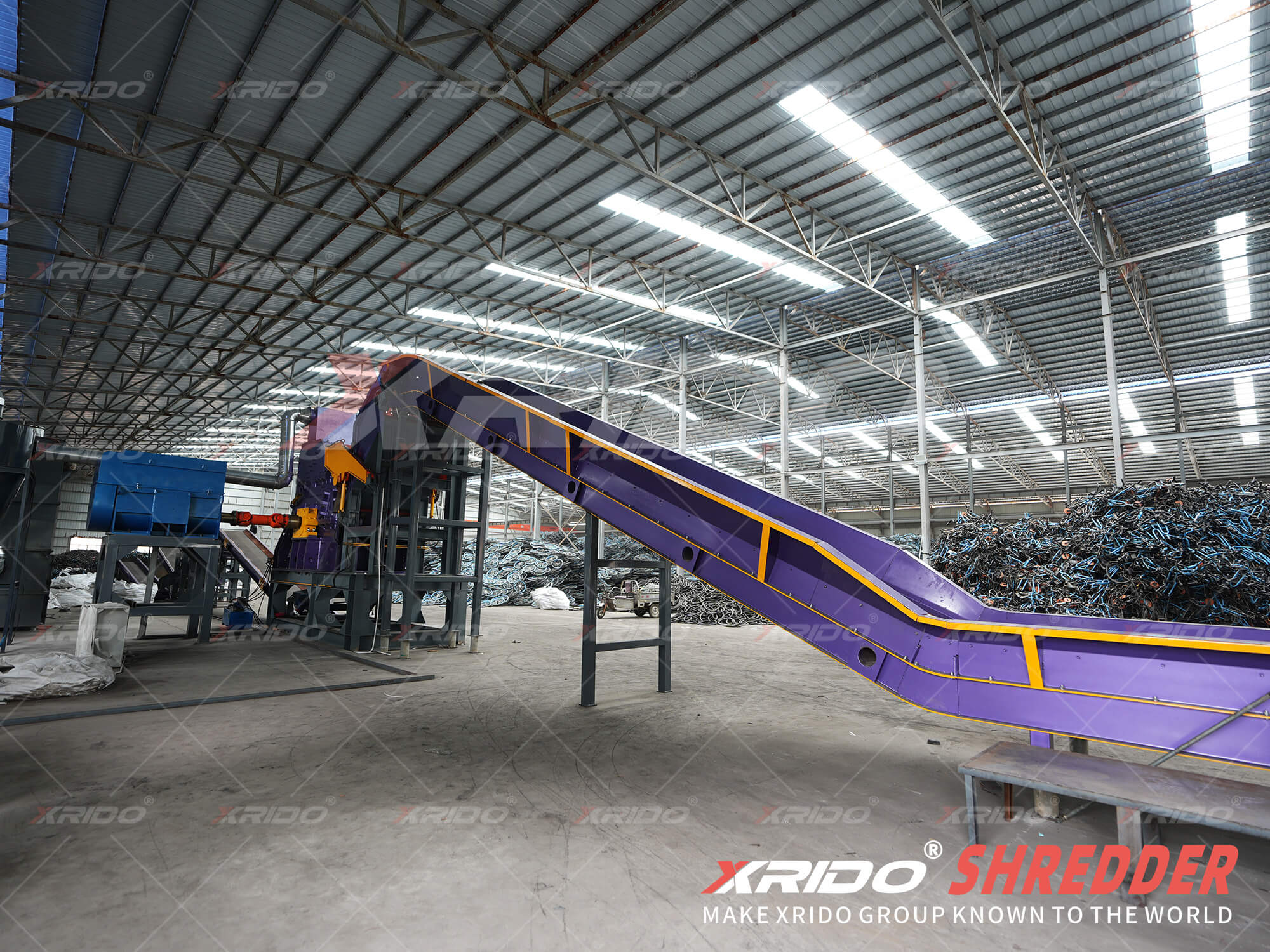
The line begins at a manual pre-processing station. Workers first use pneumatic wrenches to remove bicycle tires, cut the rubber inner tubes, and feed the stripped frames, handlebars, chains, and other metal components into the feeding conveyor belt. These frames are mostly made of carbon steel, with some high-end models containing aluminum alloy parts. Traditional manual sorting is inefficient, but this metal crusher has completely changed this situation. The waste bicycle crusher uses powerful shearing, impact, and kneading actions to shred and crush the structurally intact bicycle frames into uniformly sized granular materials, completely breaking down the combined structure of iron, aluminum, copper, and trace amounts of plastic impurities. The entire crushing system operates stably, and with the accompanying dust removal equipment, it effectively suppresses operational dust, resulting in a clean and environmentally friendly work environment. The crushed material produces uniform particles free of large debris, meeting high-precision sorting standards.
Next, the crushed material enters the magnetic separation stage. A suspended permanent magnet separator first comes into play, its surface magnetic field strength reaching 1500 Gauss, attracting carbon steel fragments—the main material of bicycle frames—like a powerful magnet. The attracted ferrous material is carried by the conveyor belt to the demagnetization zone and automatically falls into the iron collection bin, achieving a purity of over 95%. The remaining mixture continues forward to the core sorting equipment—the eddy current separator.
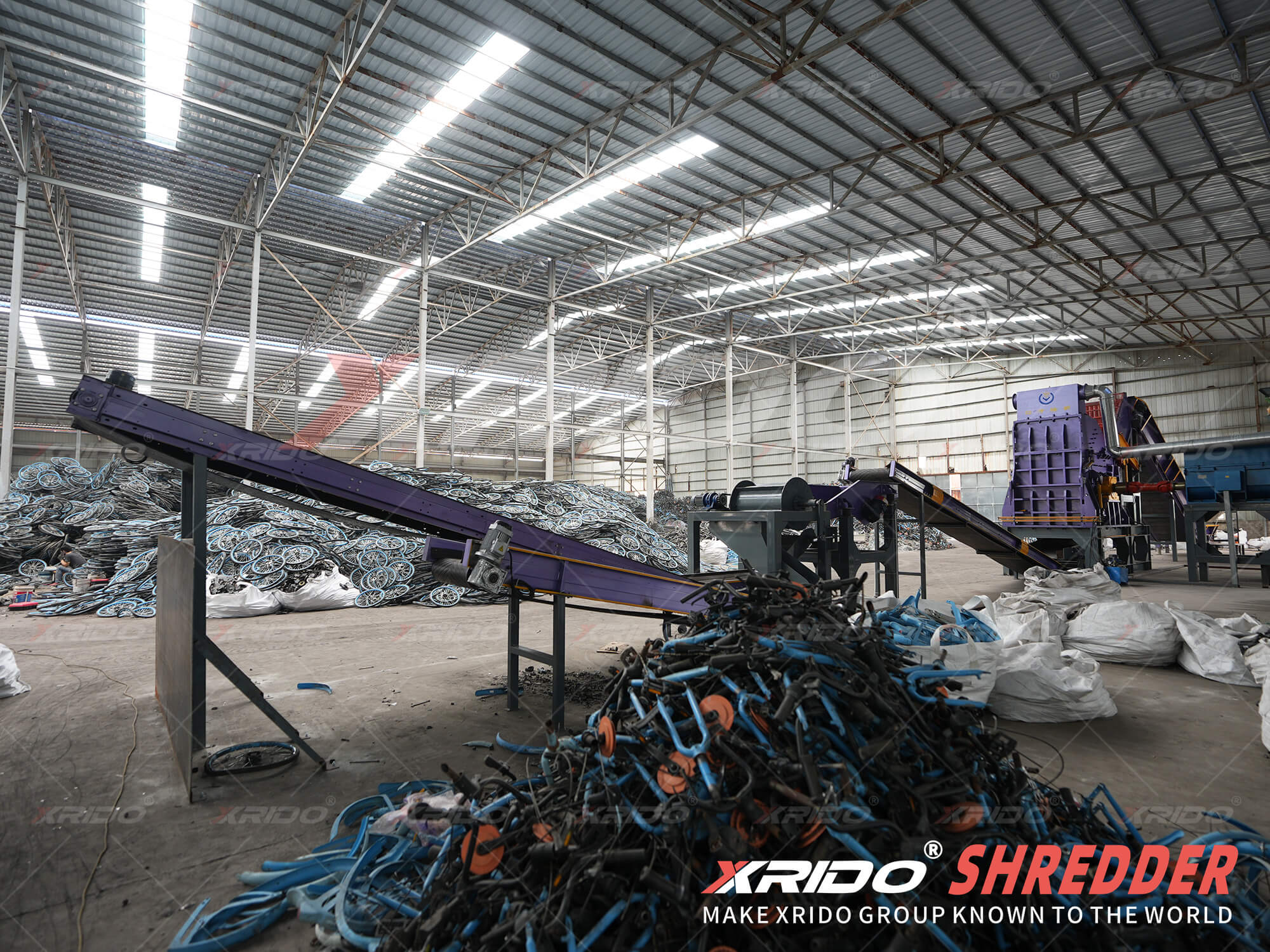
The eddy current separator operates on a highly technological principle: a high-speed rotating magnetic roller inside generates an alternating magnetic field. When material containing non-ferrous metals passes through, non-ferrous metals such as aluminum and copper induce eddy currents, thus experiencing a repulsive force opposite to the direction of the magnetic field. By adjusting the magnetic roller speed (up to 3000 rpm) and the sorting plate angle, the equipment can accurately separate non-ferrous metals such as aluminum alloy bicycle rims and handlebar parts. On-site testing shows that the sorting efficiency for aluminum parts with a diameter greater than 3 mm exceeds 92%, effectively solving the pain point of “difficult separation of mixed iron and aluminum” in traditional processes.
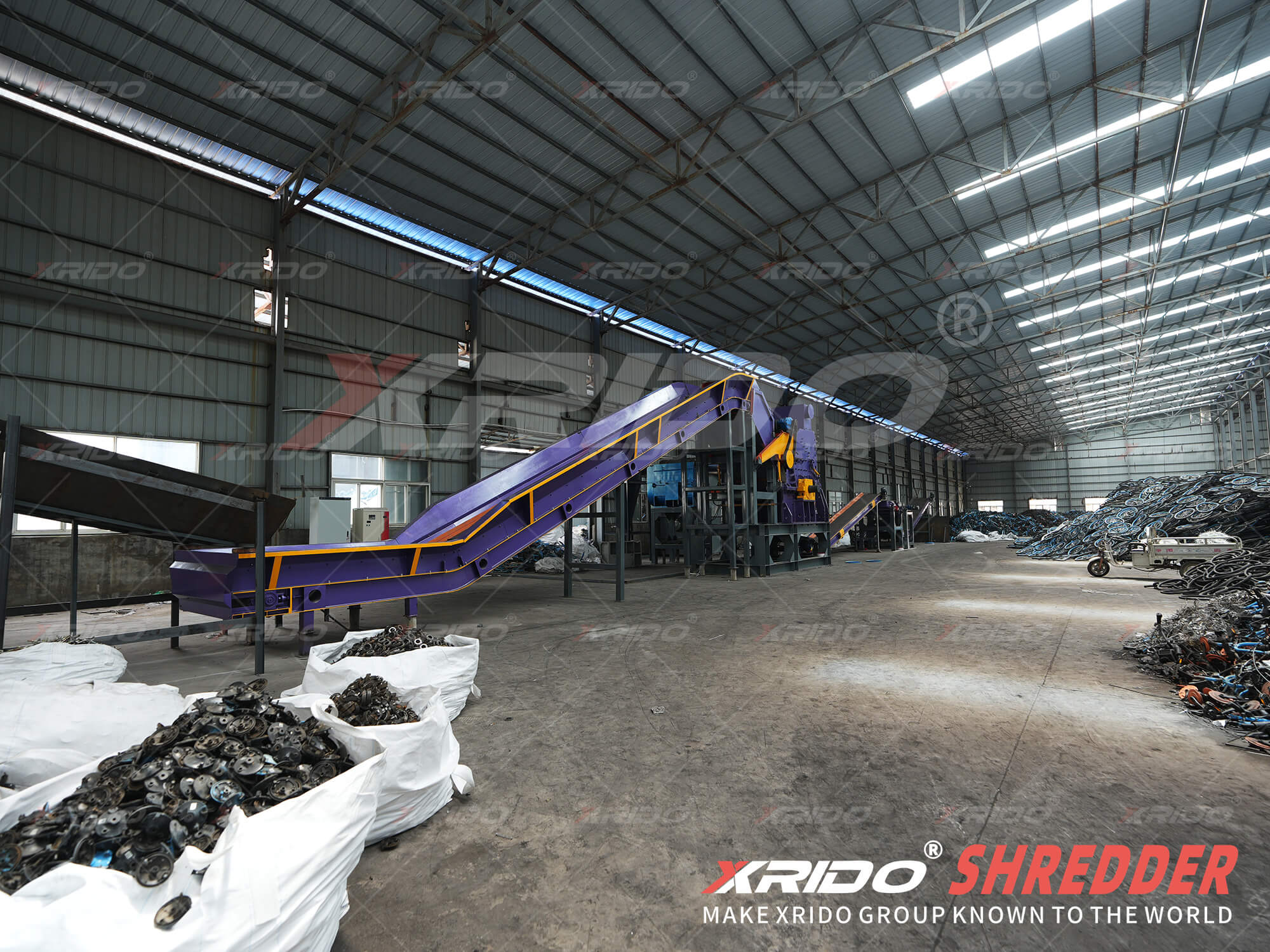
The entire waste bicycle crushing and sorting line can process 8-10 tons of waste bicycles per hour, nearly 10 times more efficient than manual dismantling. The sorted carbon steel can be directly recycled into steel, while the aluminum alloy is supplied to die-casting plants. The remaining small amount of non-metallic residue (approximately 3% of the total) is compressed and sent to waste-to-energy plants.
From abandoned bicycles on city streets to recycled raw materials in the workshop, this crushing and sorting line uses technology to bridge the “last mile” of the circular economy and provides a replicable intelligent solution for the recycling industry.