

Hot Products
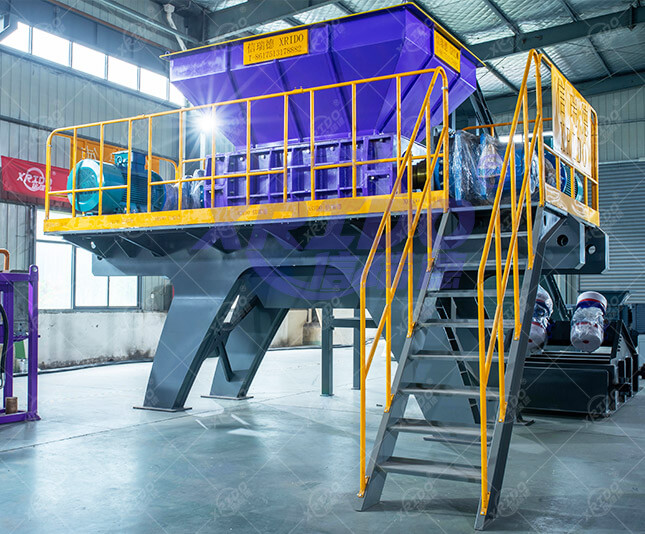
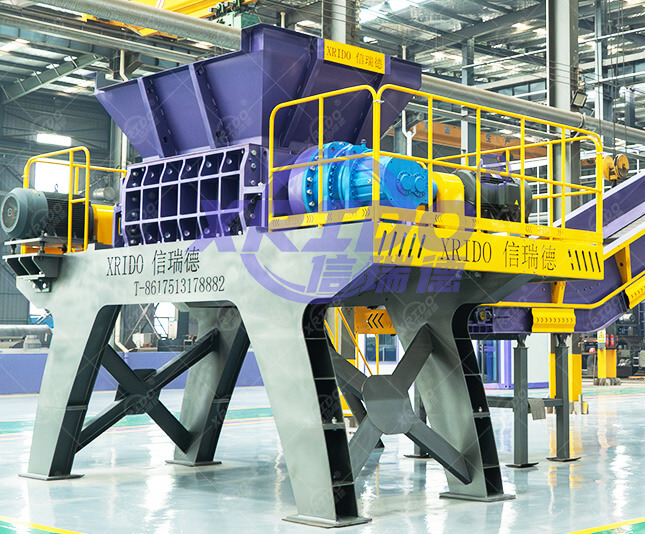
Industrial Sack Shredder
Industrial Sack Shredder (Industrial Bag Shredder): Specialized Equipment for Burlap Sack Recycling and Processing
In the field of industrial waste recycling, the industrial burlap sack (month bag) shredder is a specialized crushing equipment designed for the characteristics of ton bags (also known as bulk bags, commonly used in chemical, building materials, and grain industries)—high toughness, large volume, and easy inclusion of impurities. It can efficiently crush waste ton bags into uniform fragments, laying the foundation for subsequent cleaning, granulation, or resource utilization. It is widely used in plastic recycling plants, chemical plants, building material factories, logistics and warehousing companies, and waste sorting centers.
The core structure of this equipment revolves around a “strong tear resistance + anti-entrapment” design, employing a dual-shaft high-power blade assembly. The blades are made of high-chromium alloy and, after overall quenching treatment, achieve a hardness of HRC60-65, possessing excellent tear resistance and wear resistance. To address the issue of ton bags easily tangling around the cutter shaft, the cutter shaft surface is coated with an anti-stick coating. It is also equipped with serrated feeding rollers that forcefully compress the ton bags, feeding them evenly into the crushing chamber and preventing equipment jamming due to loose material. For impurities such as small stones and metal fragments that may be trapped in the ton bags, a wear-resistant screen is installed at the bottom of the equipment to filter impurities during crushing, ensuring the purity of the crushed material. The equipment’s processing capacity can be flexibly adapted to different needs: small models process 0.3-1 ton per hour, medium models 1-4 tons, and large models 4-12 tons per hour, meeting the batch processing needs from small and medium-sized recycling points to large factories.
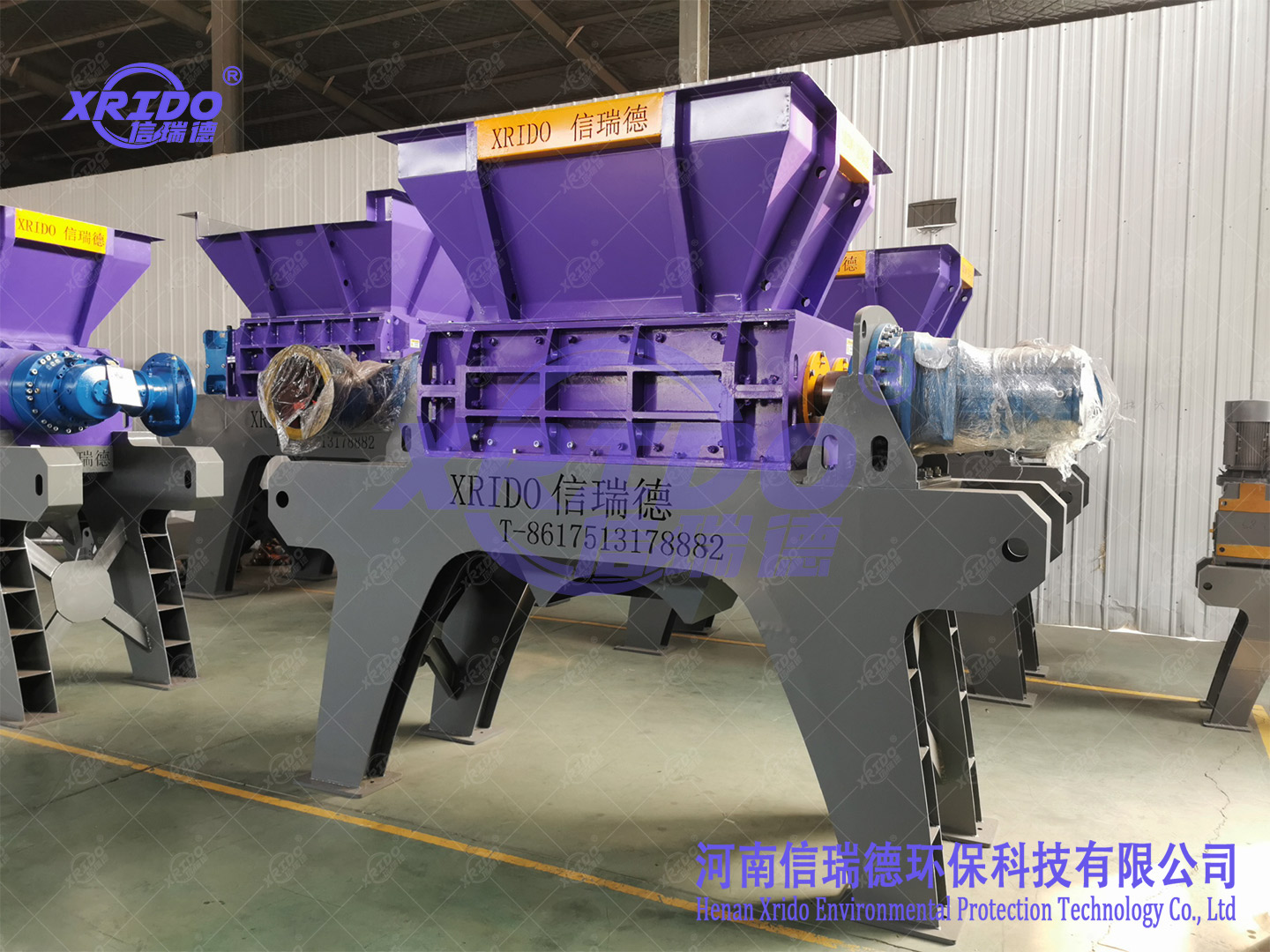
In terms of performance, the equipment emphasizes stability and durability. The machine body is constructed from a single welded section of thickened Q235 steel plate, with reinforced anti-deformation ribs added to key load-bearing areas to withstand the immense impact of crushing ton bags. Equipped with an intelligent overload protection system, the motor automatically stops and triggers an alarm when hard, difficult-to-crush objects (such as metal blocks) enter the crushing chamber, preventing blade breakage or motor burnout. Simultaneously, the equipment features a sealed soundproof enclosure with built-in sound-absorbing cotton, controlling operating noise below 78 decibels, meeting industrial environmental noise standards.
From an environmental and economic perspective, this equipment can increase the recycling rate of non-biodegradable waste ton bags to over 96%, reducing the environmental impact of “white pollution.” The volume of the crushed ton bag fragments is reduced by 10-15 times, lowering transportation costs by 70%-85%. Furthermore, the fragments are easier to separate from residual materials (such as flour and chemical powders), reducing energy consumption during subsequent granulation by 25%-35%. This saves companies disposal costs and transforms waste ton bags into recycled plastic raw materials, generating economic benefits.
In terms of operation and maintenance, the equipment adopts a PLC automated control system with a touch screen operating interface, which can realize the integrated operation of automatic feeding, crushing and discharging. Workers can become proficient in operation after 1-2 days of training. Daily maintenance is convenient. The blade assembly adopts a modular design and can be disassembled and replaced individually after wear without the need for overall shutdown. The equipment’s vulnerable parts (such as screens and pressure rollers) are highly versatile and have low procurement costs, effectively ensuring production continuity.