
Hot Products
Preventive Maintenance Schedule for Xrido Tracked Mobile Shredders
Preventive Maintenance Schedule for Xrido Tracked Mobile Shredders: Weekly, Monthly & Seasonal Care.
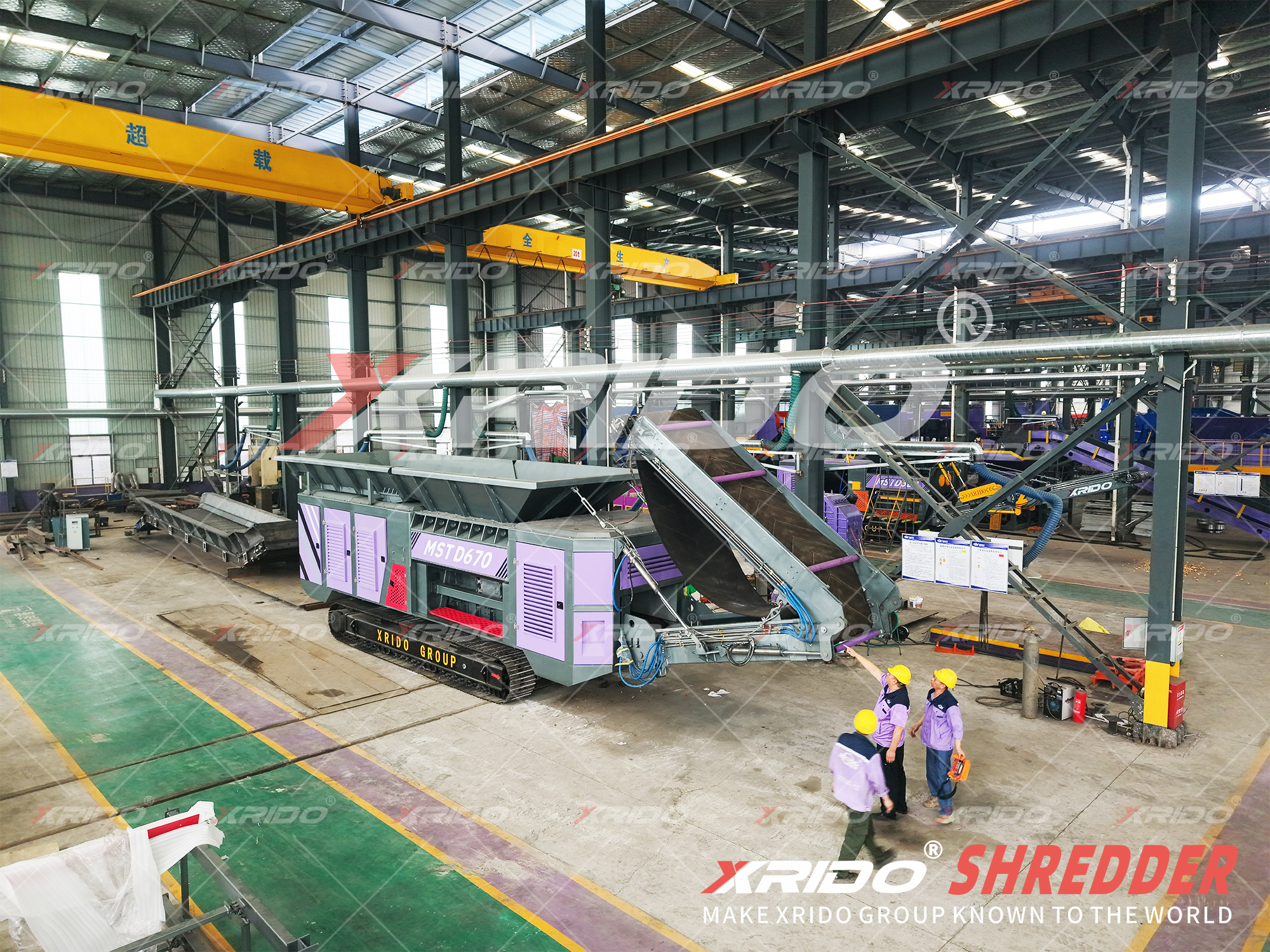
While daily checks keep your Xrido tracked mobile shredder running smoothly day-to-day, long-term reliability depends on a structured preventive maintenance (PM) program. Just like a commercial vehicle, your shredder needs scheduled servicing to catch hidden wear before it becomes a catastrophic failure. This article outlines a practical PM schedule tailored to Xrido tracked units.
The Philosophy of Preventive Maintenance:
Reactive maintenance—fixing things only after they break—is expensive. It leads to:
Extended downtime during peak seasons;
Higher repair costs due to collateral damage;
Shortened equipment lifespan;
Safety risks for operators.
Preventive maintenance flips this model. By servicing components at set intervals, you maintain peak efficiency and protect resale value.
Weekly Maintenance Tasks (Every 40–50 Operating Hours)
1. Drive System Inspection
Belts & Chains: Check tension and alignment. Loose belts slip; overtightened belts stress bearings.
Couplings: Inspect for cracks or missing bolts. Misaligned couplings cause vibration and premature gearbox wear.
2. Blade Gap Adjustment
For dual-shaft models, verify the clearance between rotating and stationary blades—typically 0.5–1 mm. Incorrect gaps cause:
Excessive noise;
Premature blade chipping;
Irregular particle size.
Use feeler gauges and follow Xrido’s torque specifications when tightening blade mounting bolts.
3. Filter Checks
Hydraulic Return Filter: Inspect for metal particles indicating internal wear.
Air Intake Filter: Clean or replace if clogged with dust or wood chips.
Fuel Filter: Drain water separators on diesel engines weekly.
4. Greasing Schedule
Apply grease to all designated zerks:
Rotor bearings;
Track rollers & idlers;
Conveyor pivot points;
Hydraulic cylinder mounts.
Over-greasing is wasteful; under-greasing accelerates wear. Follow the lubrication chart in your operator’s manual.
Monthly Maintenance Tasks (Every 200–250 Operating Hours)
1. Oil Changes
Hydraulic Oil: Drain and refill with fresh, ISO-approved fluid. Flush the system if contamination is suspected.
Engine Oil & Filter: Standard diesel engine intervals apply—typically every 250 hours.
Gearbox Oil: Check sight glasses. Milky appearance indicates water ingress.
2. Comprehensive Blade Assessment
Remove blades for thorough inspection:
Measure remaining carbide height;
Check for micro-cracks using dye penetrant (for high-volume operations);
Rotate or flip symmetrical blades to equalize wear;
Sharpen or replace blades showing >30% edge loss. Dull blades increase amp draw and reduce throughput.
3. Structural Integrity Review
Torque-check all frame bolts to factory specs using a calibrated torque wrench.
Inspect welds around the hopper, discharge conveyor, and track frames.
Verify track tension using the built-in tensioning gauge.
Quarterly & Seasonal Maintenance (Every 500–1000 Hours)
1. Electrical System Overhaul
Test alternator output and battery health.
Inspect wiring harnesses for chafing against sharp edges.
Verify sensor calibrations (temperature, pressure, RPM).
2. Cooling System Service
Pressure-test the radiator cap.
Flush the cooling system and replace coolant.
Clean radiator fins with low-pressure air—never high-pressure water, which bends fins.
3. Winterization / Summer Prep
Cold Climates: Switch to winter-grade hydraulic fluid, install block heaters, and use anti-gel fuel additives.
Hot Climates: Upgrade to higher-capacity cooling fans, check thermostat operation, and monitor hydraulic fluid temperatures closely.
4. Documentation & Tracking
Successful PM programs rely on records. Create a maintenance binder or digital folder containing:
Service date & technician name
Hours/mileage at service
Parts replaced (include serial numbers)
Fluid types & quantities used
Observations or recommendations
Many Xrido owners integrate QR-coded maintenance tags on machines, allowing instant access to service history via smartphone.
When to Call the Pros.
Some tasks demand factory-trained technicians:
Gearbox disassembly;
Major hydraulic pump rebuilds;
Control system firmware updates;
Warranty-covered repairs;
Attempting these without proper training voids warranties and risks serious injury.
A proactive maintenance schedule transforms your Xrido tracked mobile shredder from a wear-item into a long-term asset. By following weekly, monthly, and seasonal protocols, you’ll minimize unexpected breakdowns, control operating costs, and maintain high resale value.