

Hot Products
How to Recycle Metals from Discarded Bicycles?
During urban renewal and the replacement of transportation vehicles, a large number of discarded bicycles become common solid waste. These discarded vehicles contain a mixture of various metals such as steel, aluminum, and copper, as well as impurities such as plastic, rubber, and paint. Traditional manual dismantling is time-consuming, labor-intensive, has low sorting accuracy, and results in significant resource waste. Now, relying on the coordinated use of discarded bicycle shredders, specialized scrap bicycle crushers, and fully automated crushing and sorting production lines, efficient, clean, and standardized recycling of metals from discarded bicycles can be achieved, becoming an important method for solid waste treatment in the circular economy.

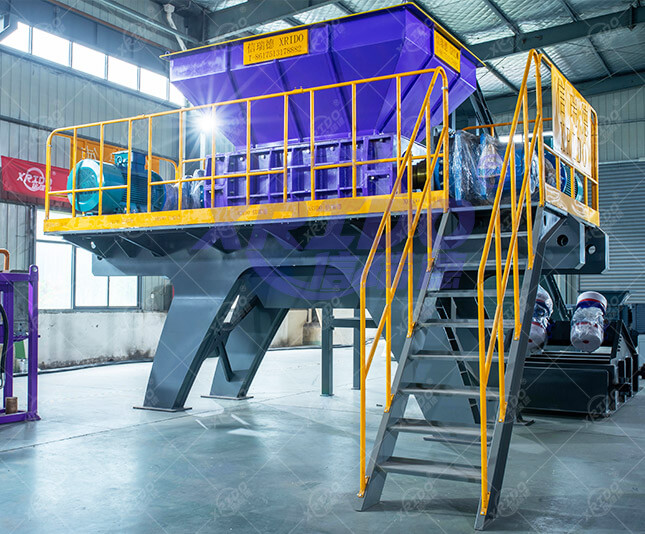
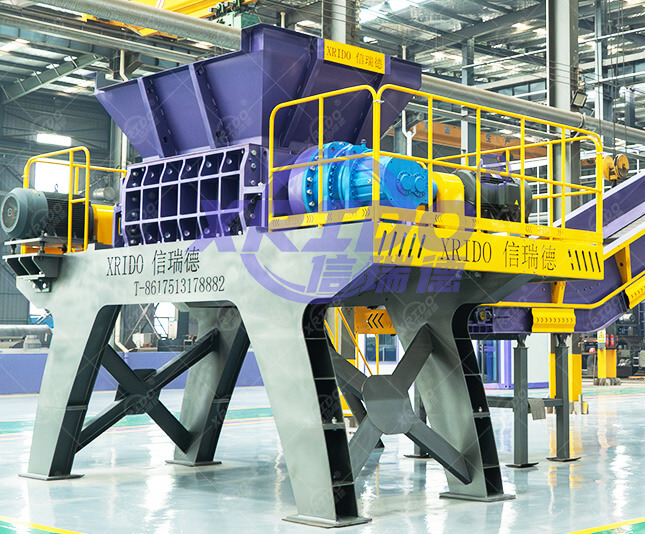
The first core piece of equipment in discarded bicycle recycling is a dual-shaft shredder, which mainly undertakes the task of rough processing of the entire bicycle. Unlike manual dismantling, the shredder can directly feed in the entire discarded bicycle, eliminating the need for tedious disassembly of the entire bicycle components. The equipment relies on high-torque blades to shear and tear the entire structure, including the frame, rims, chain, and supports, thoroughly breaking it down into uniform block-shaped coarse materials. This process effectively solves the problems of large size, tangled structure, and large storage space required for discarded bicycles. It completes the pre-treatment of material volume reduction and initially separates large pieces of rubber tires, plastic parts, and the metal substrate, clearing obstacles for subsequent fine processing and significantly improving recycling efficiency.
Customer site of the waste bicycle crushing and sorting line
The material coarsely processed by the shredder is then sent to a dedicated waste bicycle crusher for fine crushing and purification. The crusher uses a combination of high-speed impact, kneading, and grinding to break down rust, paint, and adhered non-metallic debris on the metal surface, processing irregular metal blocks into uniformly sized metal particles. For impurities in hard-to-reach areas, tightly adhered plastic fragments, and oil stains, the crusher can completely remove them, significantly improving the purity of the metal material. Simultaneously, the equipment is equipped with a screening system that automatically filters out non-metallic residues, ensuring uniform specifications and stable quality of materials entering the sorting stage.

After crushing, the entire waste bicycle crushing and sorting line operates on intelligent classification and purification, a crucial step in achieving metal classification and recycling. The production line integrates multiple sorting modules, including magnetic separation, eddy current separation, and air separation, with precise division of labor and clear stratification. Magnetic separators quickly separate ferrous metals such as steel and iron parts, screening out pure scrap steel. Eddy current separators utilize electromagnetic induction to precisely separate non-ferrous metals such as aluminum and copper, thoroughly classifying and collecting steel, aluminum, and copper. Air separation systems remove impurities such as lightweight plastics, dust, and rubber fragments. The entire process is fully mechanized, avoiding errors from manual sorting, and achieving high metal purity standards in the industry.

The sorted and purified recycled metals can be directly packaged and transported back to the furnace for remelting, reprocessing into industrial steel, aluminum alloy profiles, precision hardware parts, etc., achieving resource recycling. Compared to primary metal smelting, recycling metals from waste bicycles consumes less energy and produces less pollution, reducing mineral resource extraction and effectively solving the soil and environmental pollution problems caused by the accumulation of waste bicycles.

In summary, the integrated process of shredder coarse crushing, crusher refining, and automated sorting line purification constructs a highly efficient and environmentally friendly waste bicycle metal recycling system. The mechanized and intelligent recycling model has completely changed the drawbacks of traditional extensive recycling, truly turning abandoned bicycles into valuable resources and providing strong support for the resource utilization of solid waste and green and low-carbon development.