
Hot Products
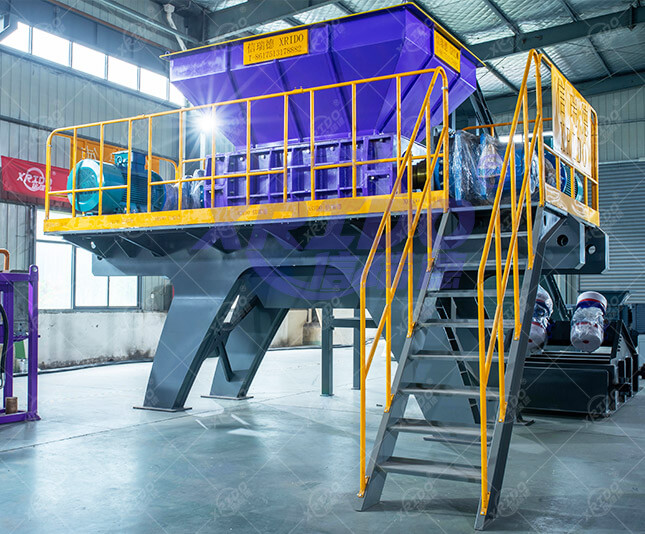
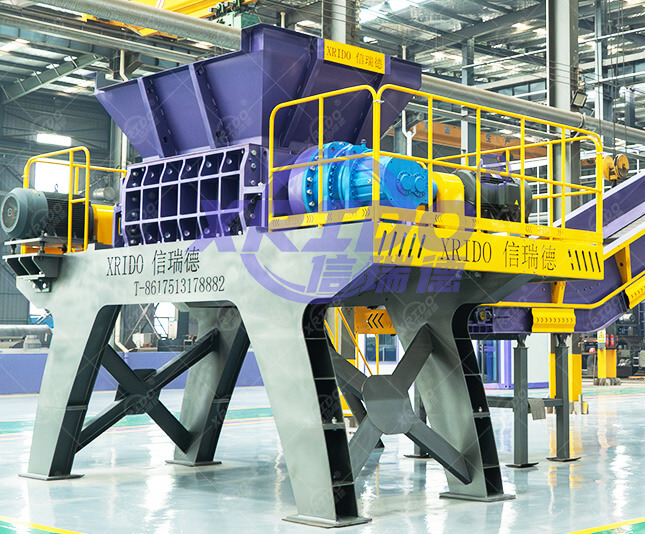
Municipal Solid Waste Shredder
Municipal Solid Waste Shredders and RDF/SRF Preparation: Core Equipment System for Waste-to-Energy Conversion
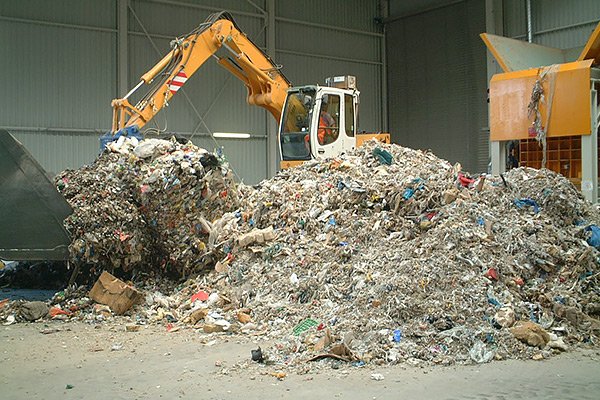
Against the backdrop of accelerated urbanization, the efficient treatment and resource utilization of municipal solid waste (MSW) has become a global focus. The system integration of municipal solid waste shredders with RDF (waste-derived fuel) and SRF (solid reclaimed fuel) technologies constructs a complete industrial chain from waste crushing to high-value energy conversion, providing a revolutionary solution for urban solid waste management.
I. Key Technological Breakthroughs in Urban Solid Waste Shredders
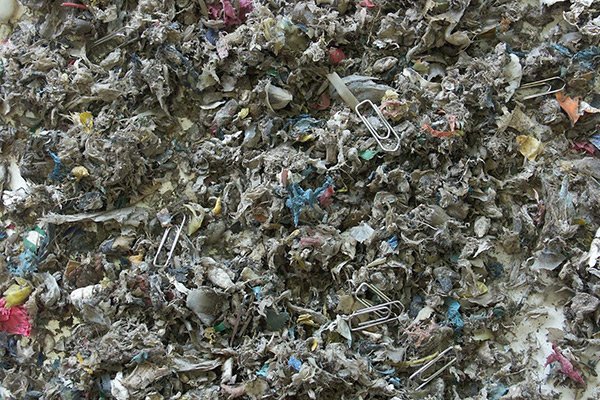
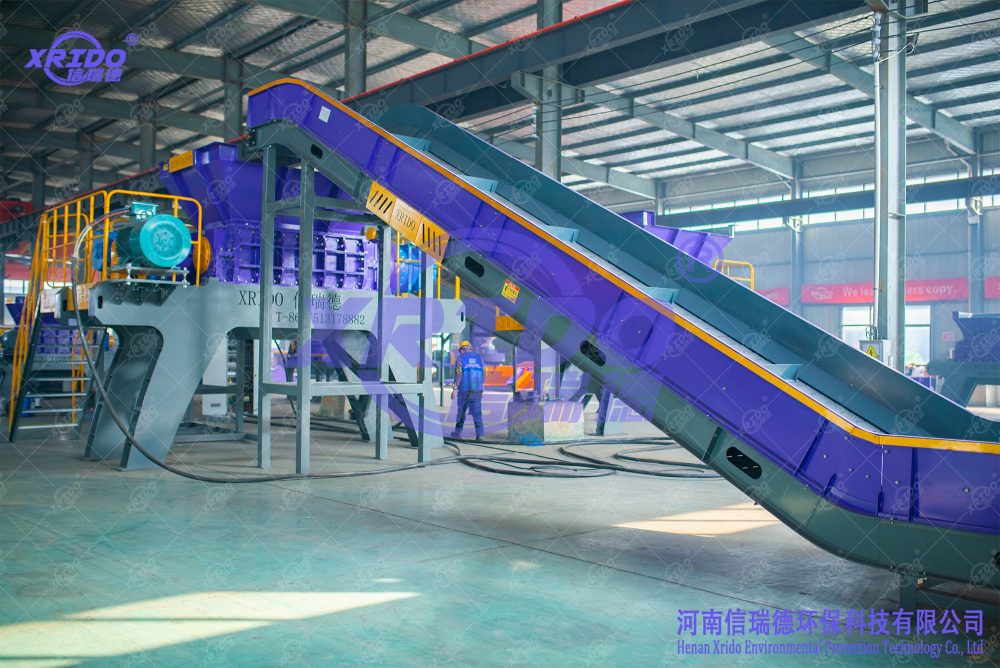
Modern urban solid waste shredders employ a three-stage crushing process to handle complex compositions: The first-stage crushing stage uses a twin-shaft shear crusher (300-500kW power) equipped with tungsten carbide alloy blades (hardness HRC60-62), capable of processing mixed solid waste including household waste, construction and renovation waste, and industrial waste, crushing large materials (such as furniture and appliance casings) to 150-300mm; the second-stage fine crushing stage uses a hammer crusher, refining materials to below 50mm through speed adjustment (1500-3000rpm); the third-stage ultra-fine crushing module can be equipped with an impact mill, targeting high-toughness materials such as plastics and rubber, ultimately producing uniform particles of 8-30mm. The equipment integrates an intelligent material distribution system, using near-infrared sensors to identify material hardness in real time and automatically adjust the blade spacing (adjustment accuracy ±0.5mm), extending blade life to four times that of ordinary equipment. The matching magnetic separator drum (field strength 0.8-1.2T) and eddy current separator (frequency 20-30Hz) achieve tiered metal recovery with a separation efficiency >92%.
II. Differentiated Preparation Path of RDF/SRF
MSW processed by a pulverizer is directionally converted into alternative fuels of different qualities based on its composition characteristics:
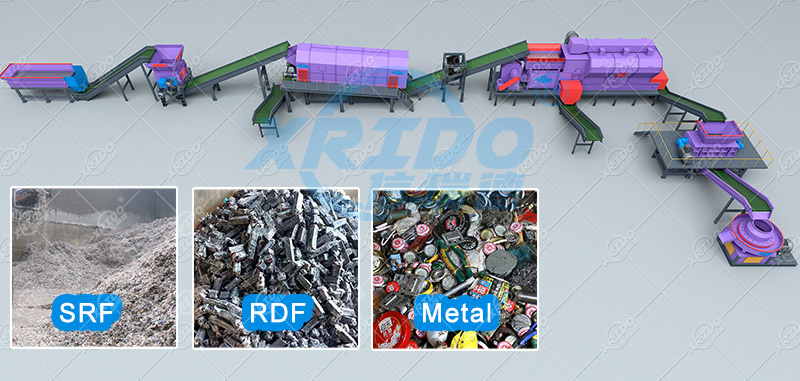
1. RDF Base Fuel: Mixed crushed materials (containing plastics, paper, and organic matter) are graded by a drum screen (pore size 20-40mm), then mixed with sawdust, sludge, etc., and dried in a drum dryer (hot air temperature 200-300℃) to reduce the moisture content to below 12%. It is then extruded into fuel rods with a diameter of 30-50mm, a calorific value of 16-20MJ/kg, suitable for combustion in fluidized bed boilers.
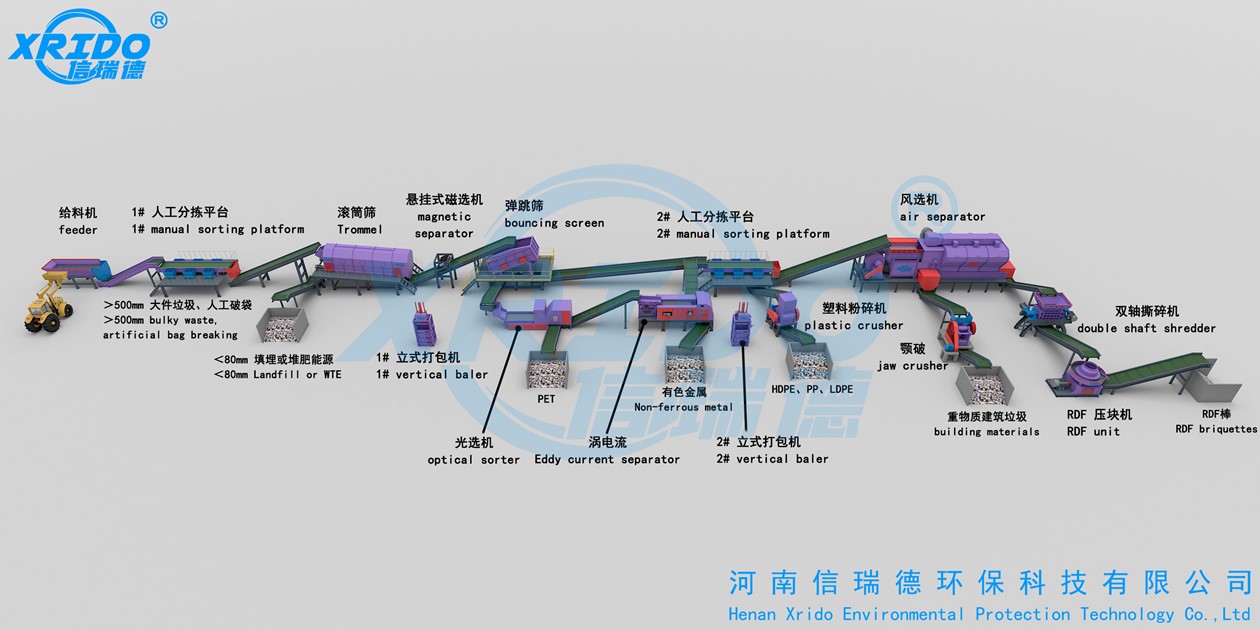
2. SRF High-End Fuel: High-calorific-value components (plastics >40%, paper >20%) undergo optical sorting (near-infrared + X-ray) to remove chlorine (<0.1%) and heavy metal impurities, granulating them into pellet fuel with a density of 0.9-1.3 g/cm³ (particle size 10-20 mm) and a calorific value of 25-32 MJ/kg, meeting EU standards (EN 15359). It can directly replace coal in cement kilns.
III. System Synergy and Environmental Benefits
The synergistic effect of this technology system is significant: the airflow sorting module equipped in the pulverizer can recycle lightweight PET bottles and PE films; the plasma deodorization system reduces workshop VOC emissions to <50 mg/m³; and the wastewater recycling system achieves 95% water reuse. Actual operational data shows that processing 100 tons of MSW can produce: 25 tons of RDF (power generation equivalent to 8 tons of standard coal), 15 tons of SRF (reducing CO₂ emissions by approximately 20 tons), and 5 tons of metal (purity >95%). A case study from an environmental park in Germany demonstrates that this system reduced landfill waste by 75% and increased energy recovery to 68%.
With the integration of artificial intelligence, the new generation of equipment is equipped with an AI visual recognition system that can automatically optimize crushing parameters; blockchain technology enables fuel traceability management. This equipment system is driving the transformation of urban solid waste from an “environmental burden” to “green energy,” providing key technological support for the goal of carbon neutrality.