

Hot Products
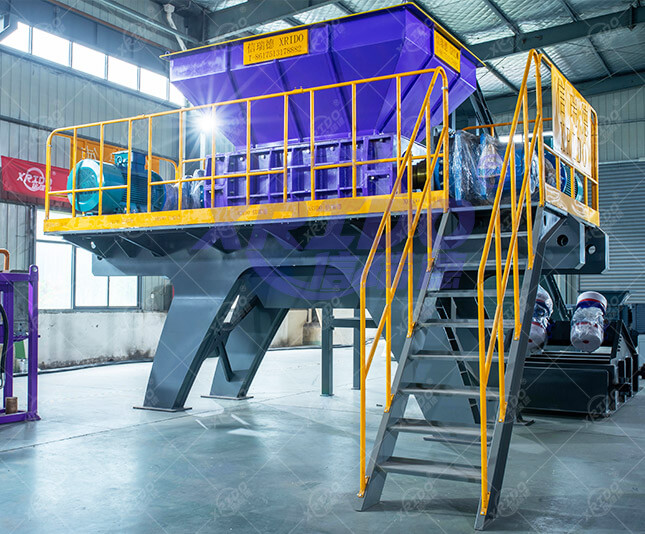
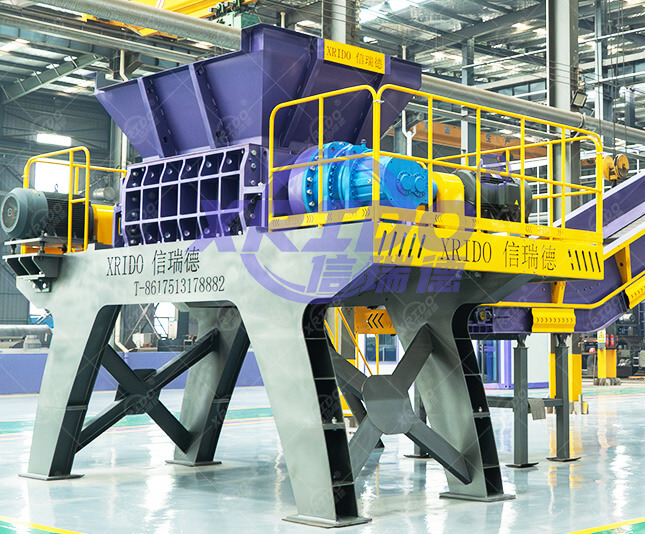
Textile Waste Shredder
Textile Waste Shredders and RDF/SRF Preparation: A Key Path to Energy Utilization of Textile Waste
Against the backdrop of rapid development in the textile industry and increasingly stringent environmental requirements, the demand for large-scale processing of waste textiles (such as garment scraps, waste fabrics, and fiber products) is urgent. Textile waste shredders (shredders), as core front-end processing equipment, combine RDF (waste-derived fuel) and SRF (solid recycled fuel) technologies to provide an efficient solution for the resource utilization of textile waste.
I. Textile Waste Shredders: “Cell-Wall Breaking Tools” Precisely Adapted to Fiber Characteristics
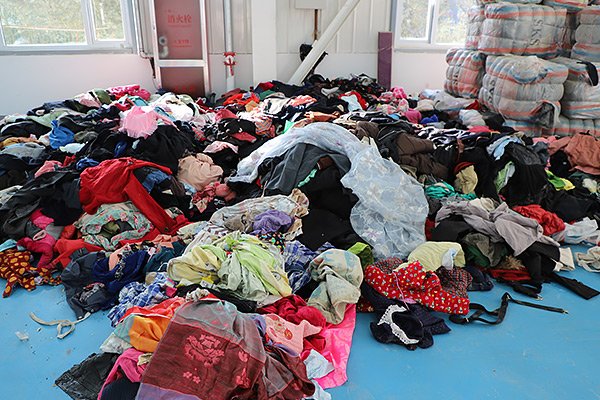
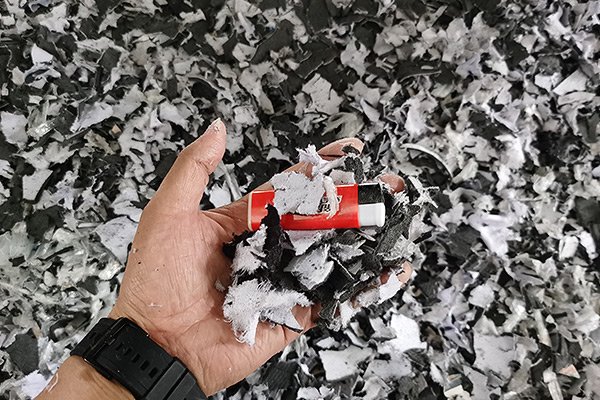
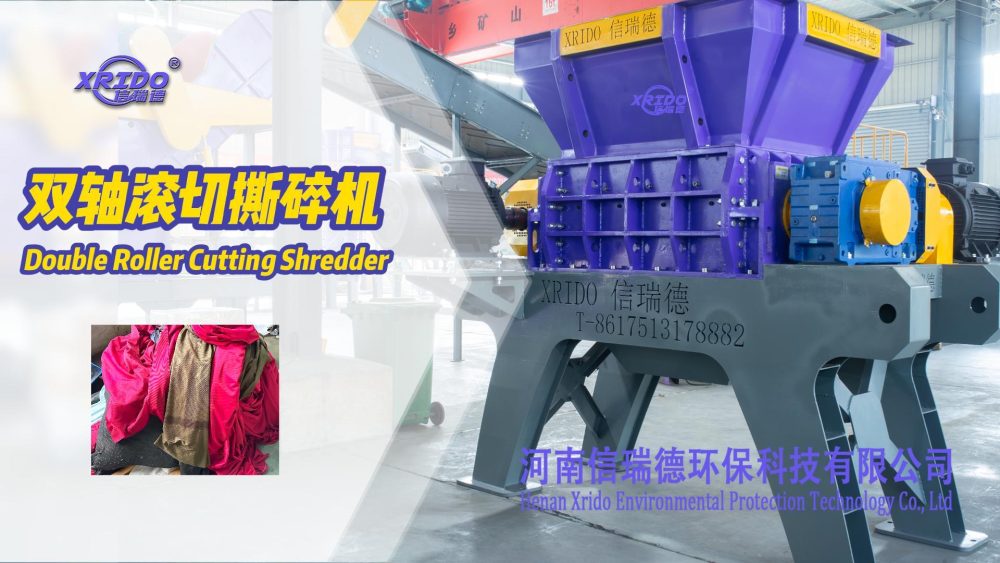
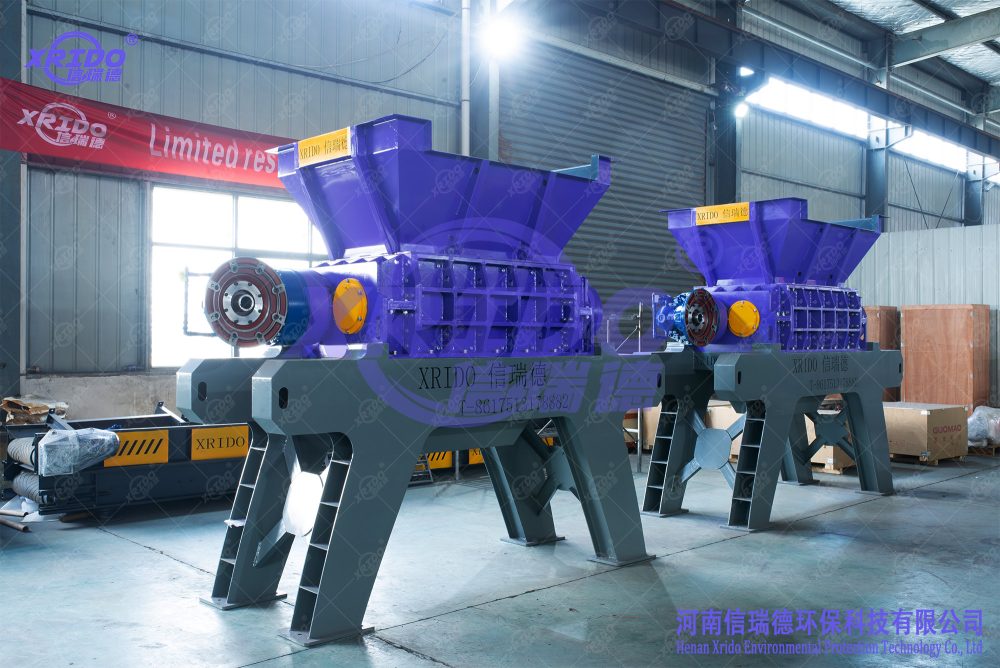
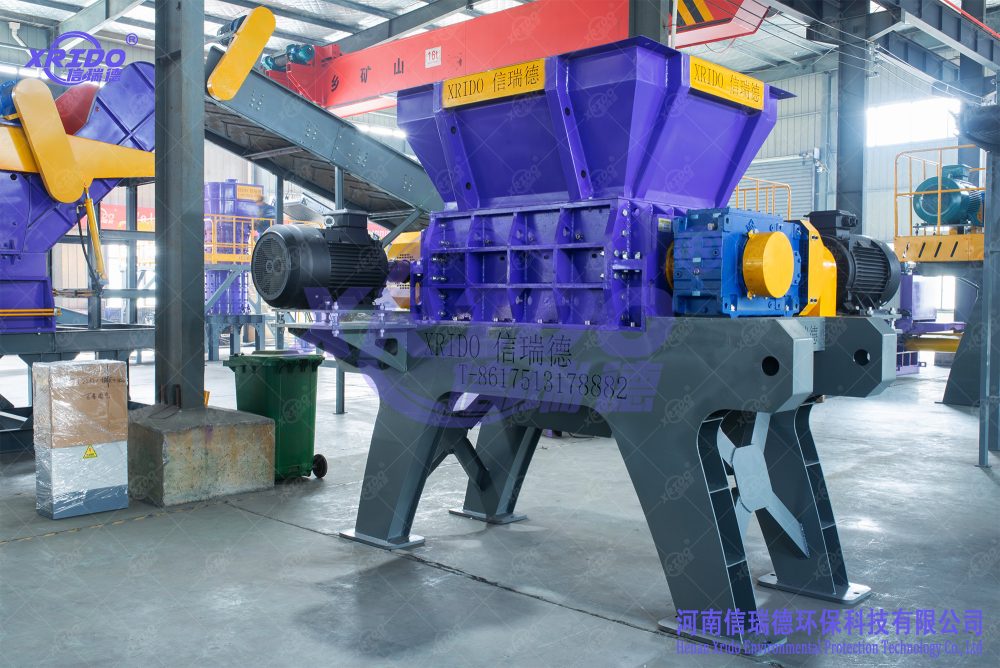
Textile waste has a complex composition, including natural fibers (cotton, linen), chemical fibers (polyester, nylon), blended fabrics, and accessories (zippers, buttons, etc.). Its softness, lightweight nature, and entanglement properties place special demands on shredding equipment. This specialized textile waste shredder employs a combined shearing and impact crushing principle: the main shaft is equipped with high-toughness alloy blades (surface hardened for 3 times improved wear resistance), and the blade roller speed is controlled at 80-150 rpm (to prevent excessive fiber heating and adhesion). The blades’ staggered shearing action breaks down the fabric into 50-100mm strips. The secondary crushing module can be equipped with a hammer mill structure to further refine the material into 10-30mm particles or short fiber bundles (length <50mm). For easily entangled synthetic fiber waste (such as polyester filament), the equipment integrates an anti-entanglement design—a guide plate at the feed inlet disperses the material, and the blade roller gap is adjustable (±2mm) to ensure continuous and stable crushing. Some models also include a magnetic separation module to pre-separate impurities such as metal zippers and buttons.
II. Conversion Path from Crushed Material to RDF/SRF
Textile waste processed by a shredder can be selectively converted into alternative fuels of varying qualities based on differences in composition purity and calorific value:
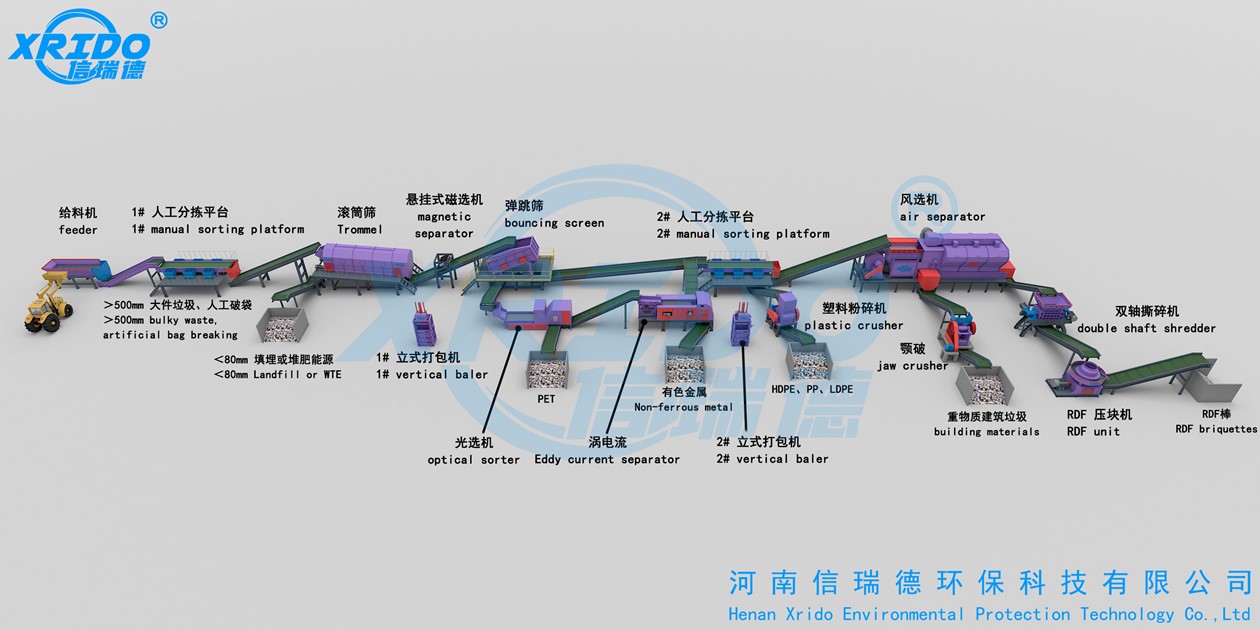
• RDF (Base Fuel): If the crushed material is a mixed textile waste (containing small amounts of auxiliary materials and low-calorific-value cotton and linen fibers), after magnetic separation to remove metals, it is mixed with waste plastics, paper, etc., and the moisture content is reduced to below 15% using a drum dryer. It is then compressed into fuel rods with a diameter of 30-50mm (or exists directly in pellet form), with a calorific value of approximately 16-20 MJ/kg. This is suitable for low-intensity combustion scenarios such as small boilers and heating systems, replacing some traditional coal.
• SRF (High-End Fuel): This process uses near-infrared spectroscopy to remove impurities (metals, non-textiles, etc.) from high-proportion synthetic fiber waste (such as garment scraps mainly made of polyester and nylon) or sorted pure textile fibers, improving material purity (synthetic fiber content >70%). The resulting pellets are then granulated to produce fuel with a density of 0.9-1.2 g/cm³ (particle size 8-20 mm) and a calorific value of 25-30 MJ/kg (approximately 80% of the calorific value of standard coal). It meets EU SRF standards (EN 15359) and can be directly used as fuel in cement kilns and power plants, replacing 30%-50% of coal.
III. Environmental and Economic Value
The combination of textile waste shredders and RDF/SRF technology achieves multiple benefits in “turning waste into energy”: On the one hand, processing 1 ton of waste textiles reduces landfill space by approximately 0.8 tons (traditional landfills account for over 60%), lowering greenhouse gas emissions such as methane; on the other hand, the produced RDF/SRF has a calorific value equivalent to 0.5-0.7 tons of standard coal per ton, providing a low-cost energy solution for the upstream and downstream of the textile industry. Taking a waste textile recycling base as an example, it processes 30,000 tons of waste fabric annually, producing 20,000 tons of high-end fuel annually through a shredder + SRF preparation system. This not only solves the pollution problem caused by waste accumulation but also generates annual revenue exceeding 5 million yuan, demonstrating the economic feasibility of this technological approach.
From crushing to conversion, the synergy between textile waste shredders and RDF/SRF technology is driving the transformation of textile waste from an “environmental burden” to “green energy,” injecting new momentum into the circular economy.