

Hot Products
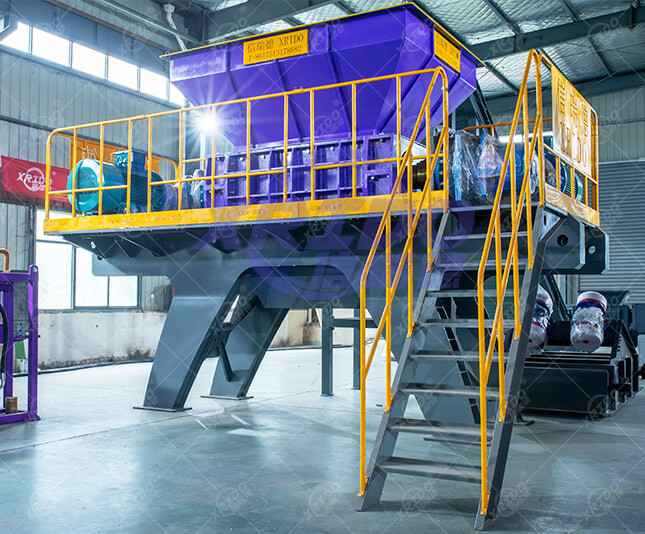
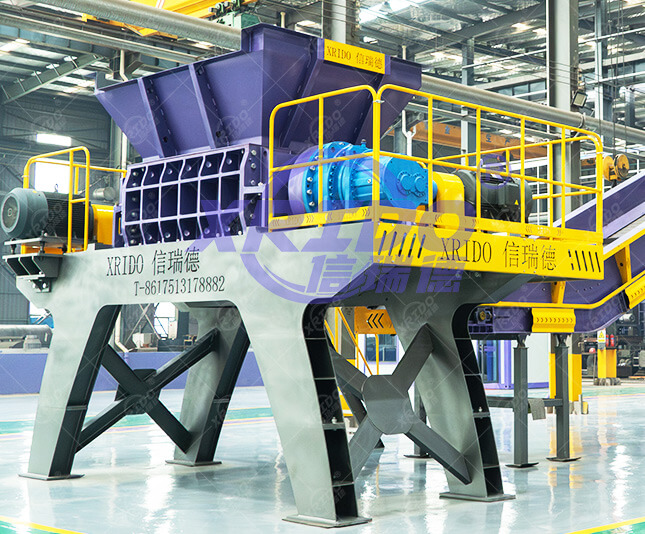
Pre-shredder for End-of-Life Vehicles and Scrap Metal
Pre-shredding Lines for End-of-Life Vehicles and Scrap Metal: Custom-Engineered Solutions.
In the dismantling, recycling, and processing of end-of-life vehicles (ELVs) and scrap metal, components such as vehicle bodies, chassis, and heavy metal structures present challenges due to their large size and complex geometry. Attempting to shred these items directly often leads to equipment jams, uneven shredding, and incomplete liberation of impurities. Professional pre-shredding is essential for efficient scrap metal recovery. Our company specializes in the R&D and manufacturing of equipment for the deep processing of ELVs and scrap metal. We provide comprehensive, turnkey pre-shredding lines, fully customizable to specific operational requirements, offering tailored shredding and sorting solutions for recycling enterprises.
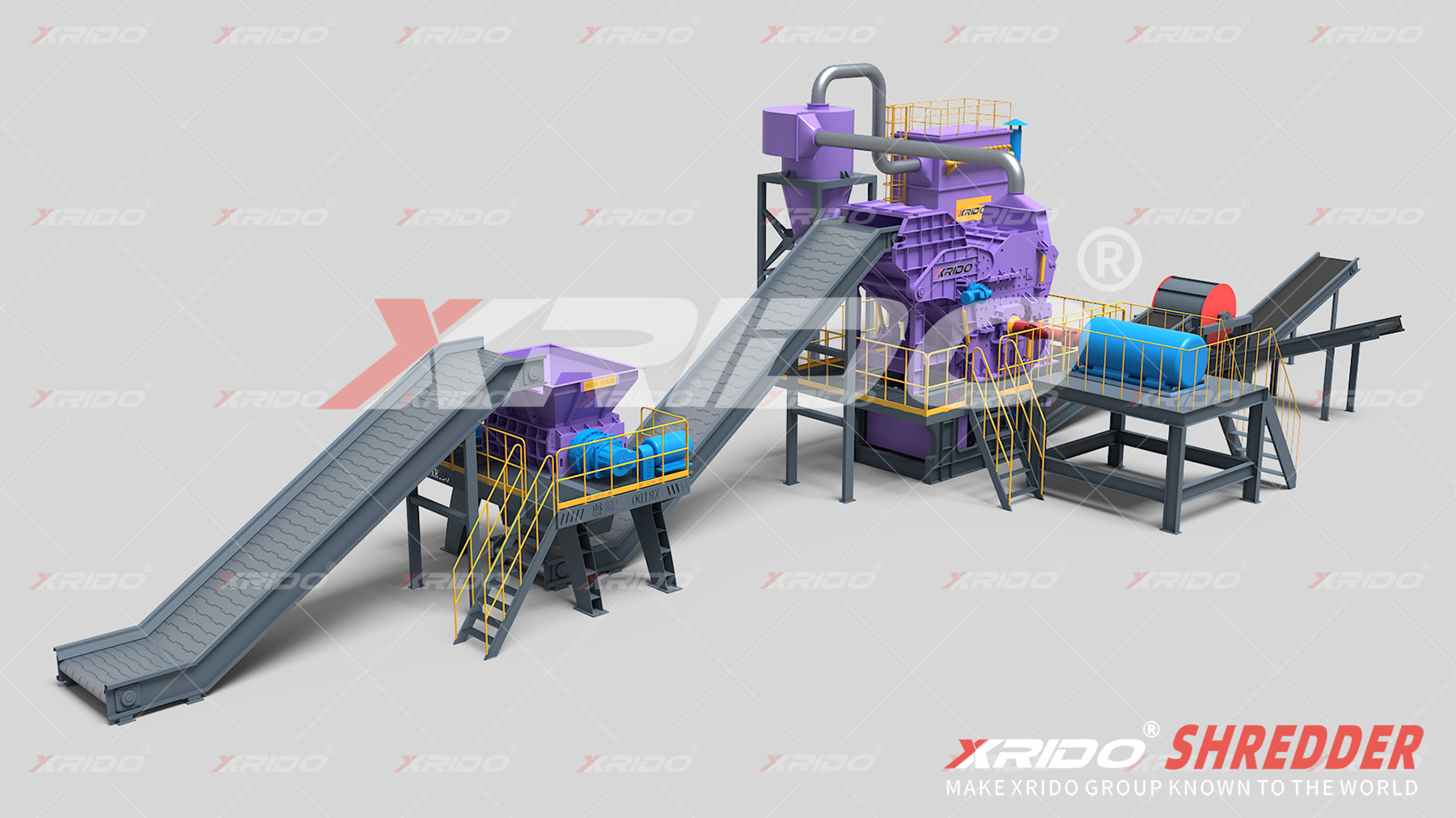
Our complete pre-shredding line for ELVs and scrap metal utilizes a sophisticated, multi-stage shredding process. The core configuration features three primary units—a dual-shaft metal shredder, a heavy-duty metal crusher, and a high-precision sorting system—creating a seamless, closed-loop workflow: “pre-shredding/pre-treatment, fine shredding, and intelligent sorting.” Designed specifically for heavy-duty materials such as vehicle bodies, chassis, scrap steel, and industrial metal waste, this system effectively overcomes the common industry drawbacks of traditional processing methods, including low efficiency, poor output quality, and high material loss.
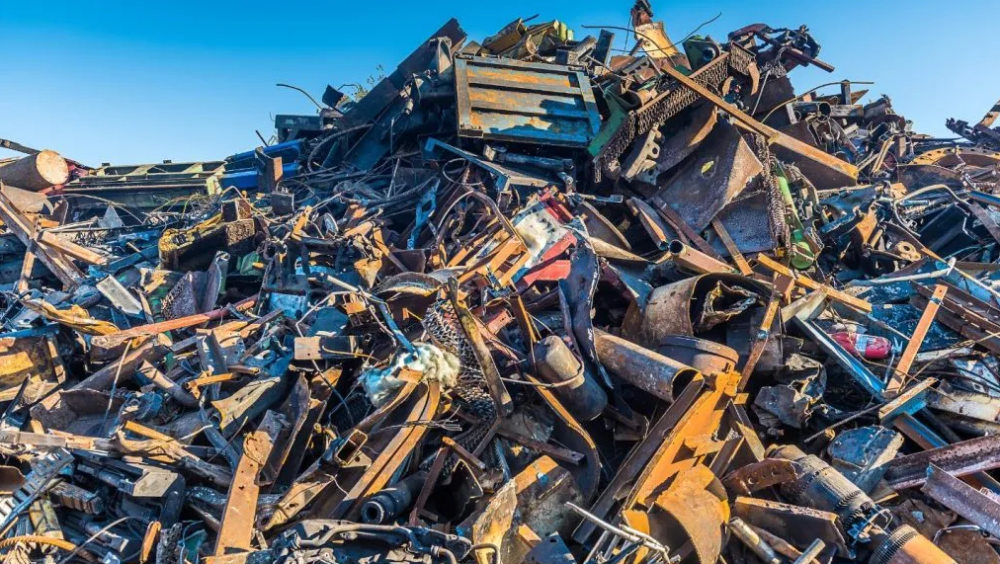
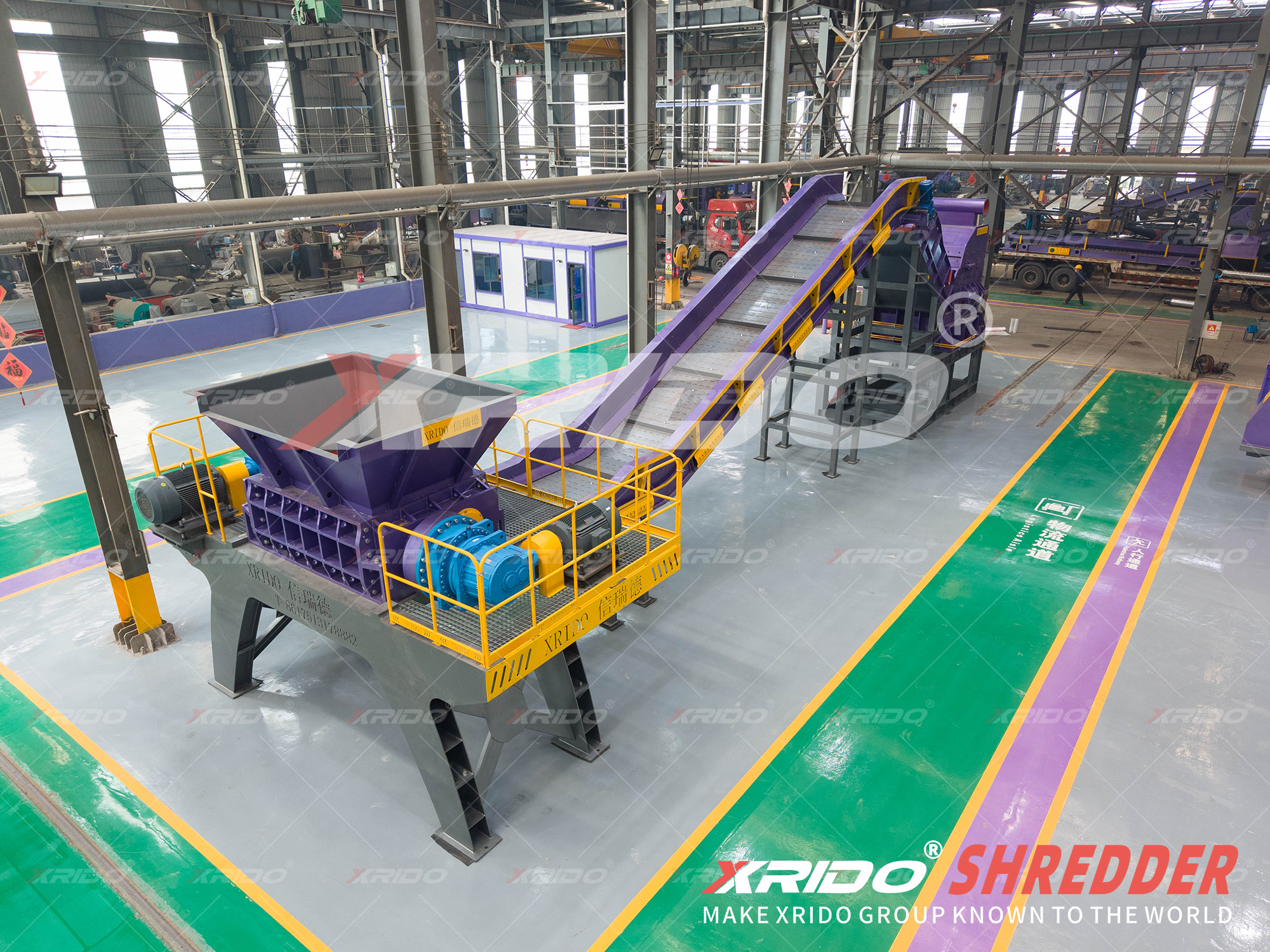
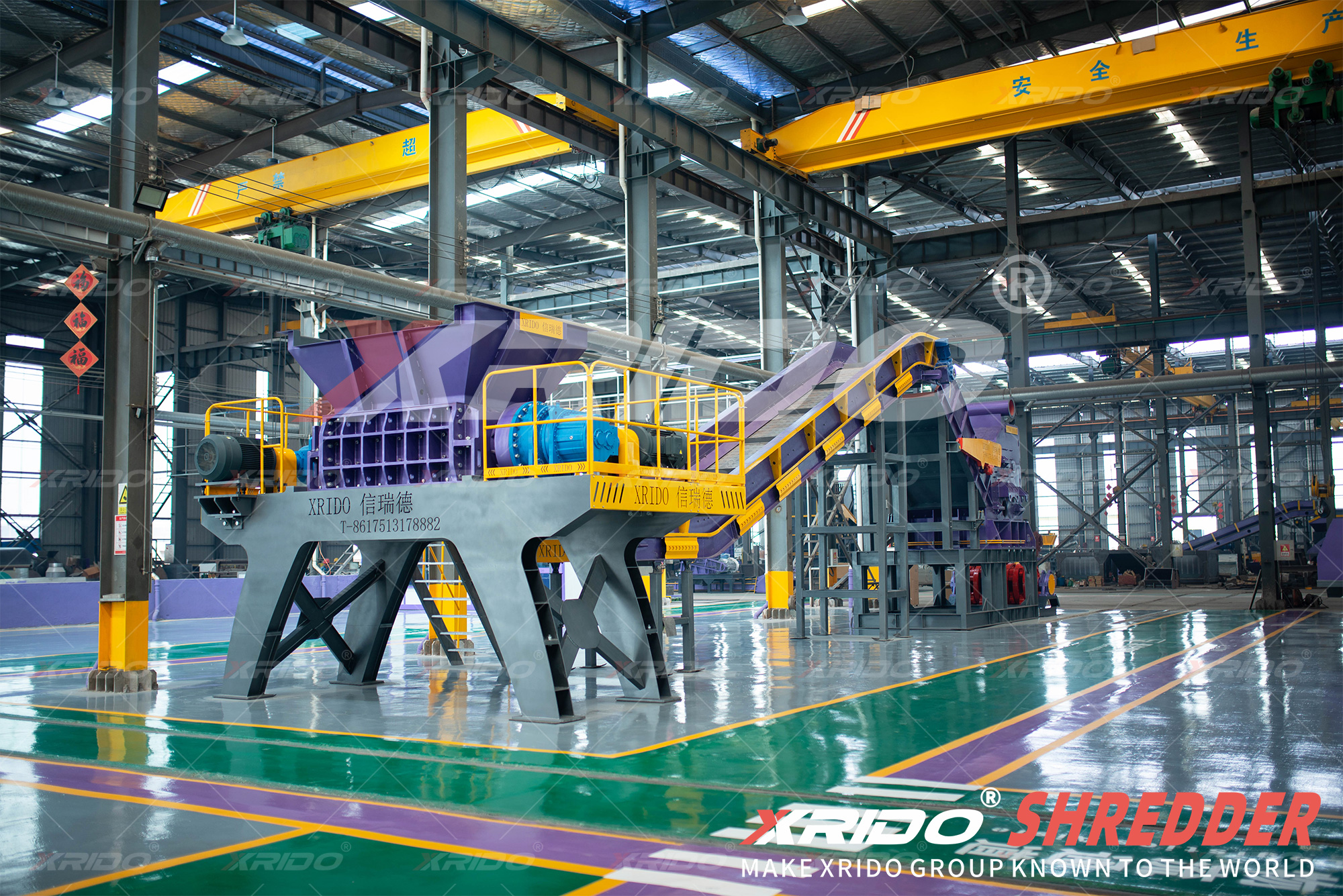
The dual-shaft metal shredder serves as the primary pre-shredding unit and the critical first step in the ELV processing workflow. Given the rigid structure and massive volume of vehicle bodies and chassis, these items cannot be fed directly into fine-shredding equipment. Utilizing a powerful dual-shaft shearing and tearing mechanism, this machine effortlessly dismantles entire ELVs and large metal components, reducing irregularly shaped, bulky items into uniform, standardized fragments. This ensures consistent feed specifications, effectively preventing jams, overloads, or blockages in downstream equipment. It lays a solid foundation for the subsequent fine-shredding stage and is well-suited for high-capacity, intensive industrial production environments.
Once pre-shredded, the material is then fed into the primary hammer-style metal crusher for further, intensive processing. The equipment is equipped with high-alloy, wear-resistant hammer heads. Through a combination of high-speed impact, grinding, and collision, it finely breaks down shredded metal materials. This process not only ensures a uniform particle size but also thoroughly strips away surface impurities—such as paint, rust, adhesives, and dirt—effectively detaching metal from non-metal components. The output particle size is adjustable, allowing for customization based on specific client requirements to produce consistent, high-purity metal granules.
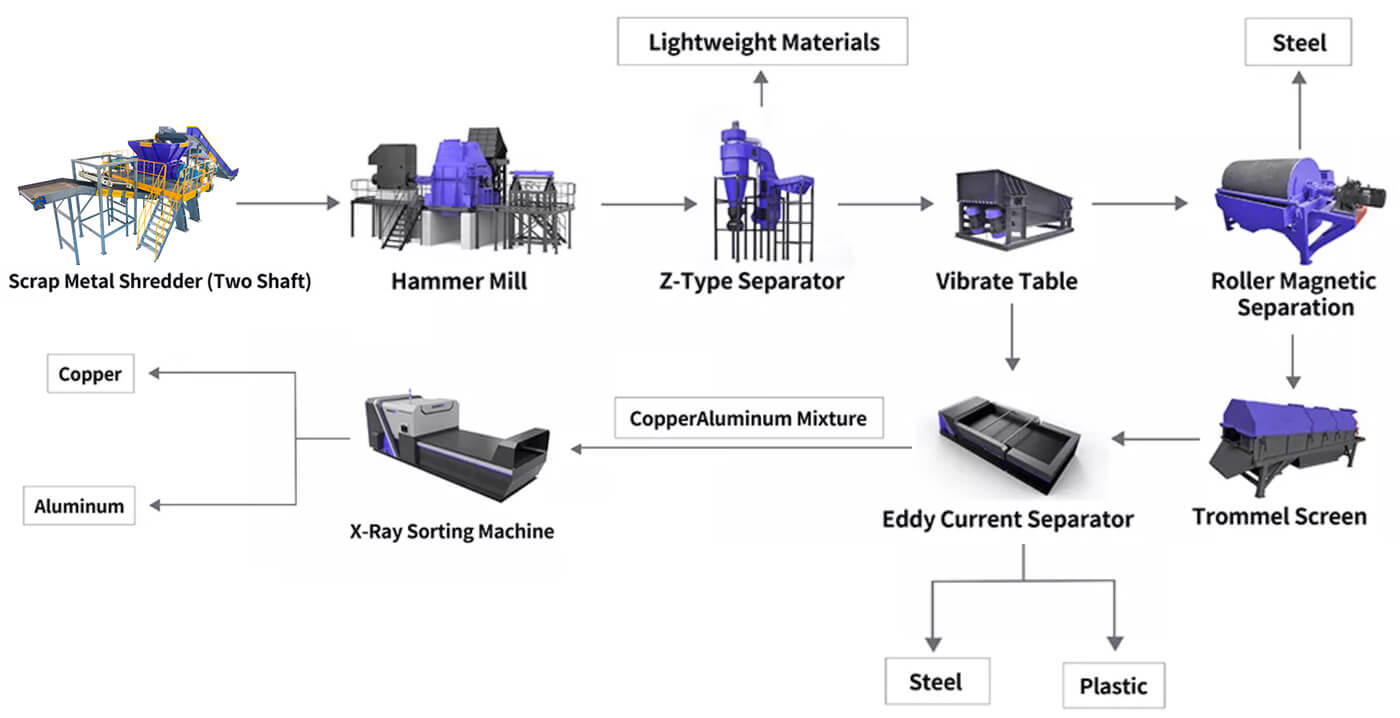
The system integrates specialized sorting machinery that employs multiple physical separation techniques—including magnetic, air, and gravity-based sorting—to precisely isolate various metals such as iron, aluminum, and copper. It also completely removes non-metallic impurities like plastics, rubber, and dust. The entire process is free from secondary pollution and achieves industry-leading purity levels, significantly increasing the value of recycled scrap metal. The final output is ready for direct use in smelting furnaces, meeting industrial standards for recycling and reuse.
 As the original manufacturer, we eliminate the need for intermediaries. We handle the entire lifecycle—from R&D and production to assembly and commissioning—in-house. We offer bespoke, end-to-end production line solutions tailored to each client’s specific site dimensions, processing capacity, material types, and final product requirements. Our scrap metal recycling lines feature a high degree of automation, stable operation, and low energy consumption. The enclosed processing system complies with environmental emission standards, making it an ideal, cost-effective solution for large, medium, and small-scale operations, such as end-of-life vehicle (ELV) dismantling facilities and scrap metal processing plants.