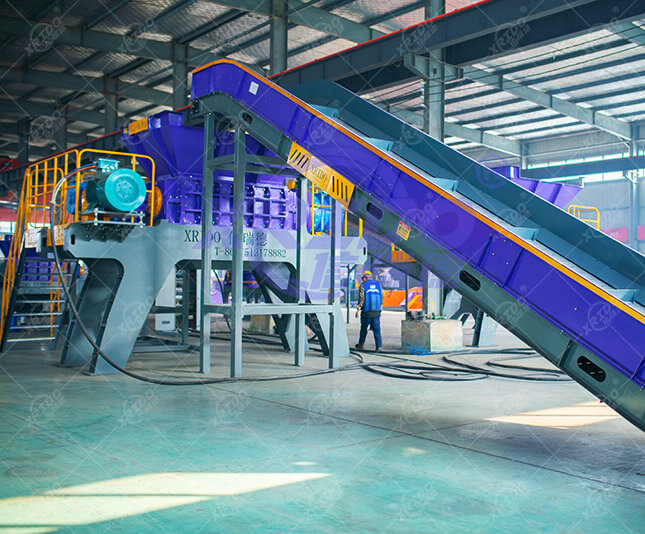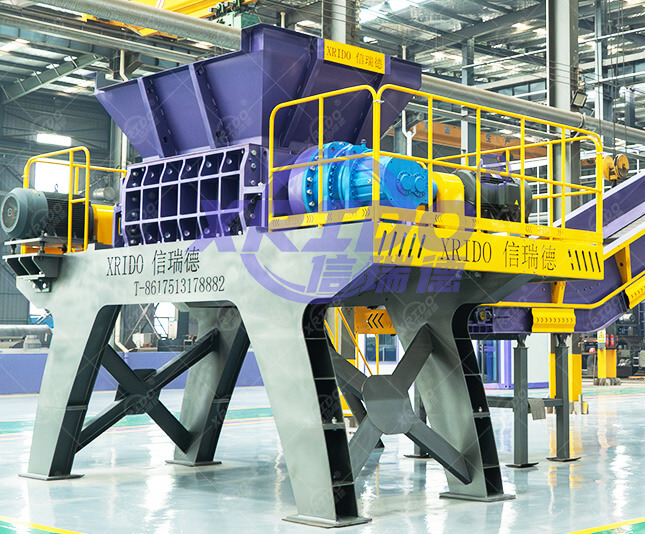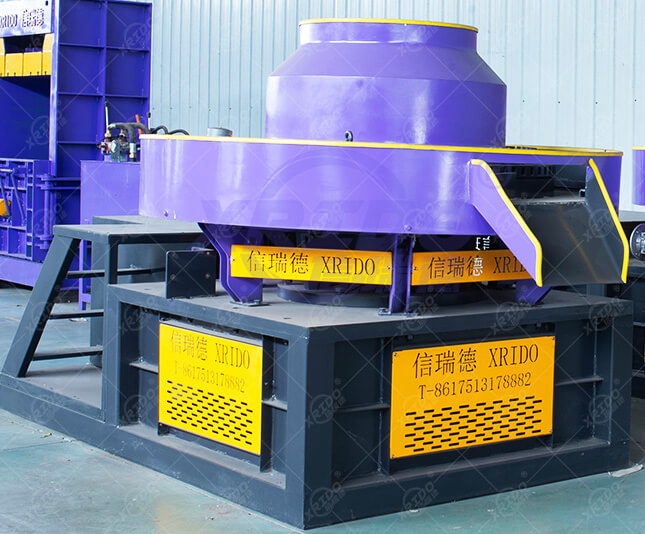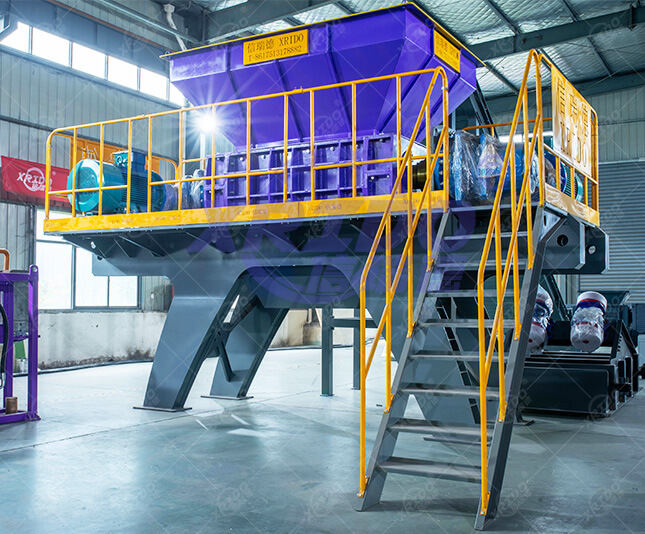
Single Shaft Shredder
Patented Products
Input Size : Customize
Applicable Material : Plastics: used plastic bottles, plastic film, plastic barrels, etc.; Rubber: tires and rubber product scraps; Fibers: waste paper, cloth, wood, straw; Small and medium-sized metals: thin iron sheets, aluminum products, etc.

Product Description
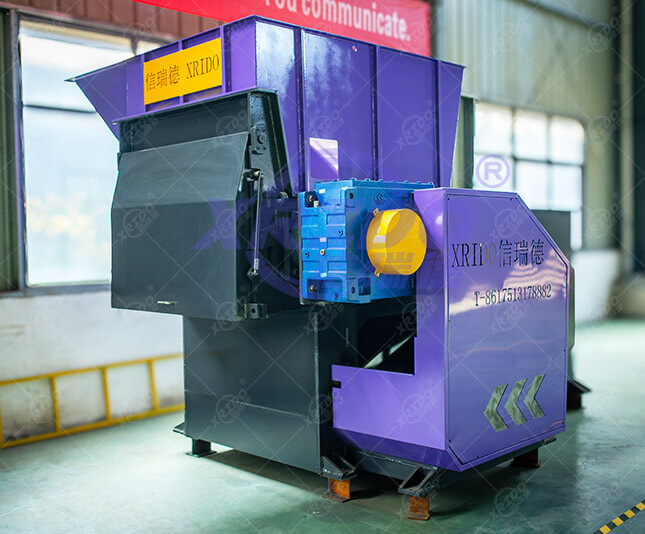
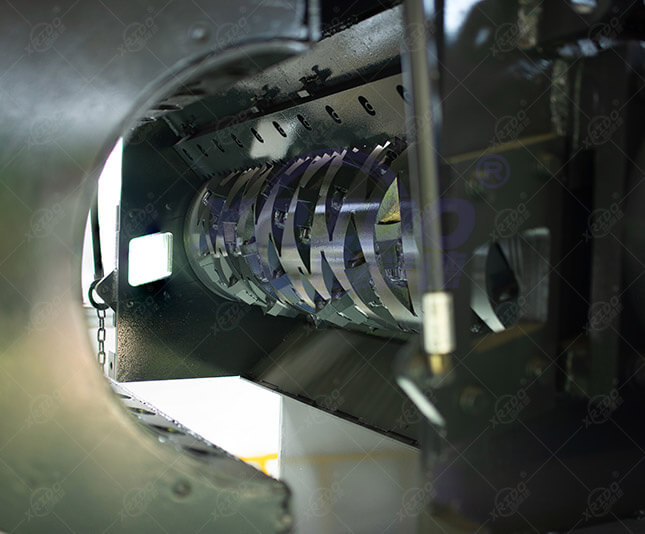
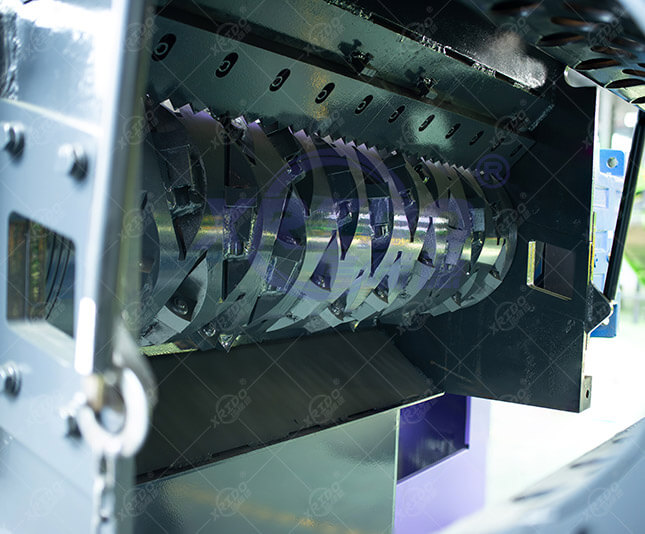
A single-shaft shredder is a type of shredder with a single rotating cutter shaft as its core working component. It is primarily used to break various types of solid waste (such as plastic, rubber, wood, paper, metal, and household garbage) into smaller fragments or particles for subsequent recycling, transportation, or disposal. The cutter shaft is typically equipped with multiple sets of staggered blades. The rotating cutters work in conjunction with a fixed backing plate (or fixed blade) to shear, tear, and shred the material.
APPLICABLE
- Plastics: used plastic bottles, plastic film, plastic barrels, etc.;
- Rubber: tires and rubber product scraps;
- Fibers: waste paper, cloth, wood, straw;
- Small and medium-sized metals: thin iron sheets, aluminum products, etc. (requires wear-resistant blades).


WORKING PRINCIPLE
The core working components of a single-shaft shredder are a rotating cutter shaft and a fixed liner (or fixed blade). The specific process is as follows:
1. Material Conveying: The material to be shredded (such as large pieces of plastic, scrap tires, etc.) enters the shredding chamber through the feed inlet.
2. Shearing and Tearing: The cutter shaft rotates at high speed, creating alternating shear forces between the rotating blades on the shaft and the fixed blades fixed within the chamber, gripping and continuously tearing the material.
3. Crushing and Screening: The repeated action of the rotating and fixed blades breaks the material into smaller particles. Fragments that meet the required size are discharged through the gap between the cutter shaft and the liner. Larger pieces that do not meet the required size remain in the chamber and are crushed until they meet the discharge conditions.
FEATURES
1. Simple structure and easy maintenance.
2. Excellent crushing performance for tough materials.
3. High crushing efficiency and low energy consumption.
4. Wide range of applications.
5. Small footprint and low cost.
Technical Parameters
| Model | Blade diameter (mm) | Feed inlet size (mm) | Capacity (kg/h) | Power (kw) | Size (L×W×H) (mm) | Weight (kg) |
| XRD - DZSS - 600 | 260 | 600×550 | 300 - 500 | 15 | 1800×1300×1700 | 2850 |
| XRD - DZSS - 800 | 300 | 800×600 | 500 - 800 | 37 | 2800×1800×2100 | 4200 |
| XRD - DZSS - 1000 | 350 | 1000×700 | 800 - 1500 | 45 | 2800×2000×2100 | 6500 |
| XRD - DZSS - 1200 | 400 | 1200×900 | 1500 - 2500 | 55 | 2800×2500×2100 | 7800 |
| XRD - DZSS - 1400 | 450 | 1400×900 | 2500 - 4000 | 75 | 2800×2800×2100 | 9600 |
| XRD - DZSS - 1600 | 500 | 1600×1000 | 4000 - 6000 | 90 | 3000×2800×2100 | 12500 |
(The capacity varies depending on the characteristics of the materials. )