

Hot Products
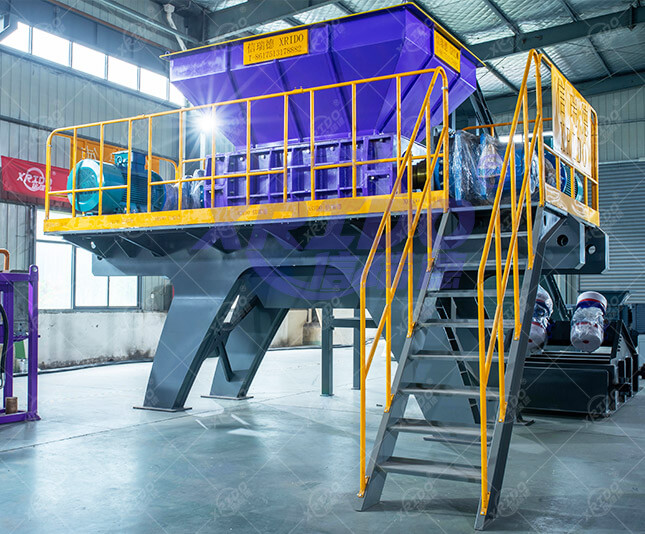
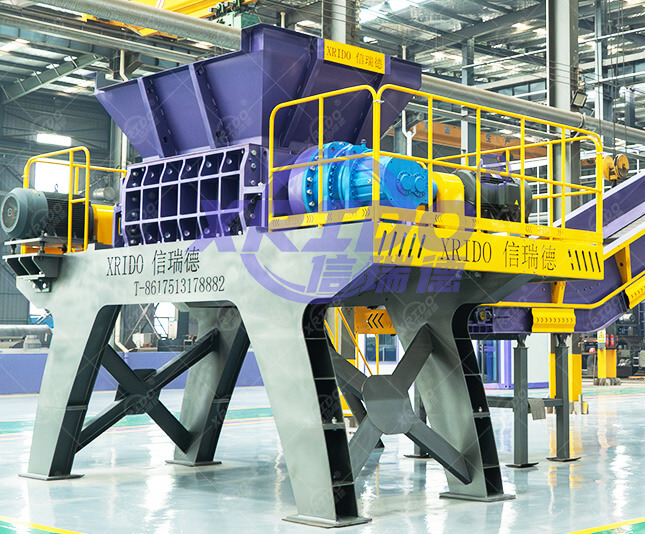
Mobile Waste Car Shredding and Sorting Line Successfully Completes Trial Run
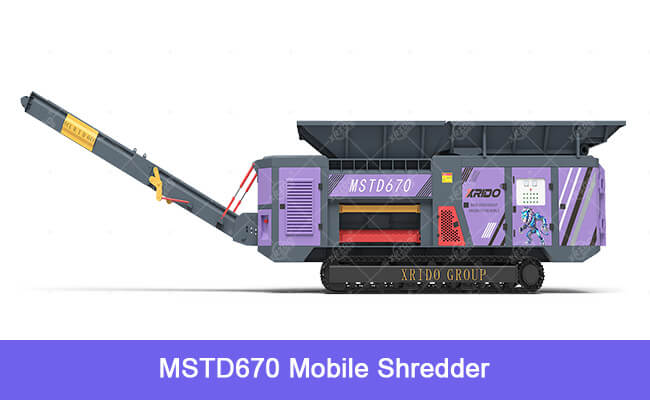
Recently, a mobile waste car crushing and sorting line equipped with an MSTD670 mobile shredder, a 950 mobile crusher, and magnetic separation and eddy current separation systems successfully completed its full-process trial run under both no-load and loaded conditions. The line demonstrated stable operation and precise sorting, marking a new breakthrough in mobile, refined recycling technology for end-of-life vehicles and providing core equipment support for cost reduction, efficiency improvement, and green transformation in the renewable resources industry.
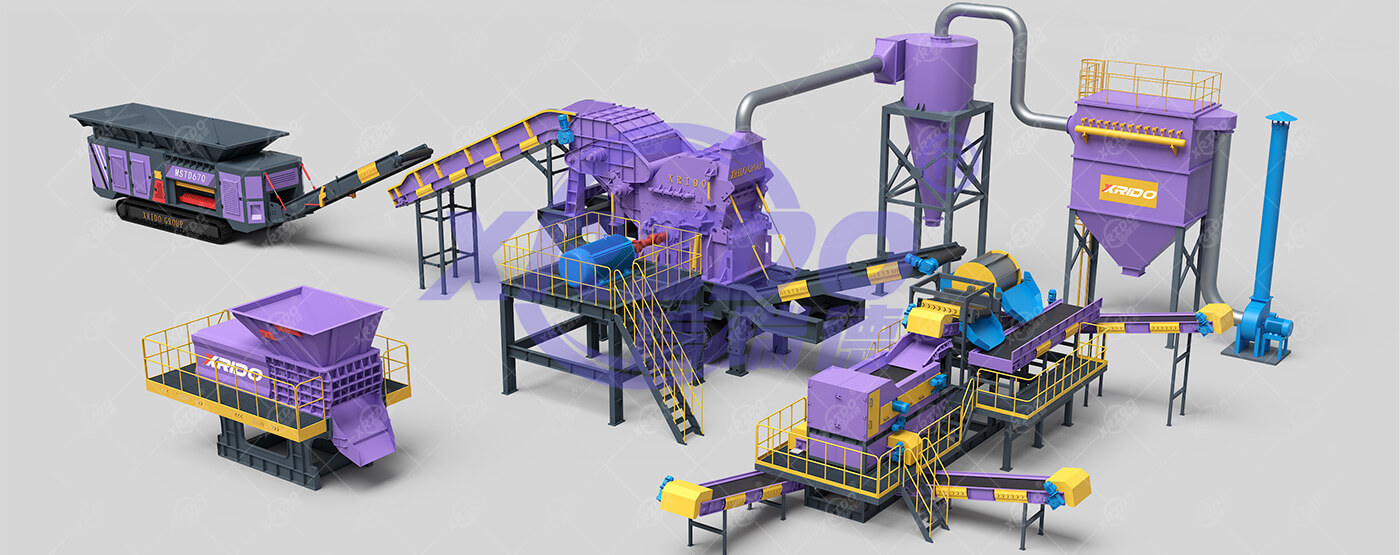
Against the backdrop of deepening “dual-carbon” policies and the continuous growth in the volume of end-of-life vehicle recycling, traditional fixed crushing lines suffer from pain points such as long construction periods, fixed sites, high vehicle transportation costs, and low resource recovery rates. The mobile crushing and sorting line tested this time adopts a vehicle-mounted modular integrated design, integrating core units such as crushing, conveying, sorting, and dust removal. It can be quickly moved by trailer to directly reach end-of-life parking lots and recycling stations for on-site processing, completely eliminating site and infrastructure limitations and achieving a flexible operation mode of “equipment following raw materials.”
The entire production line uses the MSTD670 mobile shredder as its core for coarse crushing. Featuring a low-speed, high-torque design and equipped with high-strength alloy steel blades, it can easily shred large materials such as scrapped vehicles and flattened car bodies, processing them into 200-300mm blocks. It boasts advantages such as anti-jamming, wear resistance, and durability, making it suitable for continuous operation under complex conditions. The coarsely crushed material is then conveyed by a belt conveyor to a 950 mobile crusher for fine crushing, further reducing it to 50-150mm. This ensures the complete separation of components such as steel, copper, aluminum, rubber, plastics, and sponge, laying the foundation for subsequent high-precision sorting.
The sorting stage integrates a magnetic separation + eddy current dual system to construct a refined recycling system. The magnetic separation unit uses high-strength rare-earth magnetic rollers to efficiently adsorb and separate ferrous metals such as steel, achieving a purity of over 98%, suitable for direct smelting in steel mills. The eddy current separator precisely screens non-ferrous metals such as copper and aluminum, with a recovery rate exceeding 95%, completely solving the problem of mixed and low-value non-ferrous metals in traditional sorting. Simultaneously equipped with air separation and screening devices, it separates lightweight waste materials such as plastics, rubber, and foam, achieving separate collection of metals and non-metals, and increasing the comprehensive resource recovery rate to over 95%.
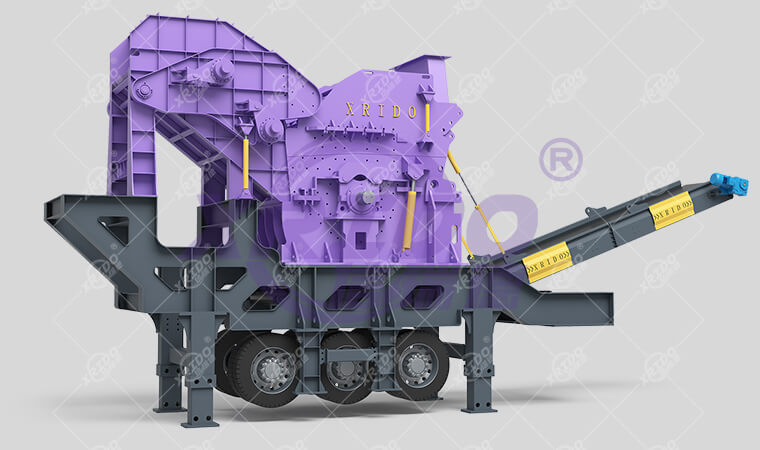
Compared to traditional equipment, this mobile crushing and sorting line has significant core advantages:
Flexibility and Efficiency: No fixed infrastructure is required, relocation is convenient, a single production line can process 3-6 scrapped vehicles per hour, and complete the sorting of a single vehicle in 3-5 minutes, significantly shortening the operation cycle;
Energy Saving and Environmental Protection: Equipped with enclosed dust removal and noise reduction devices, waste oil is pre-treated and recycled, resulting in low dust and low noise throughout the process, meeting environmental impact assessment standards;
Cost Reduction and Revenue Increase: It eliminates the cost of centralized transportation of scrapped vehicles, improves raw material utilization through on-site processing, reduces labor costs by over 70%, and helps enterprises maximize economic benefits.
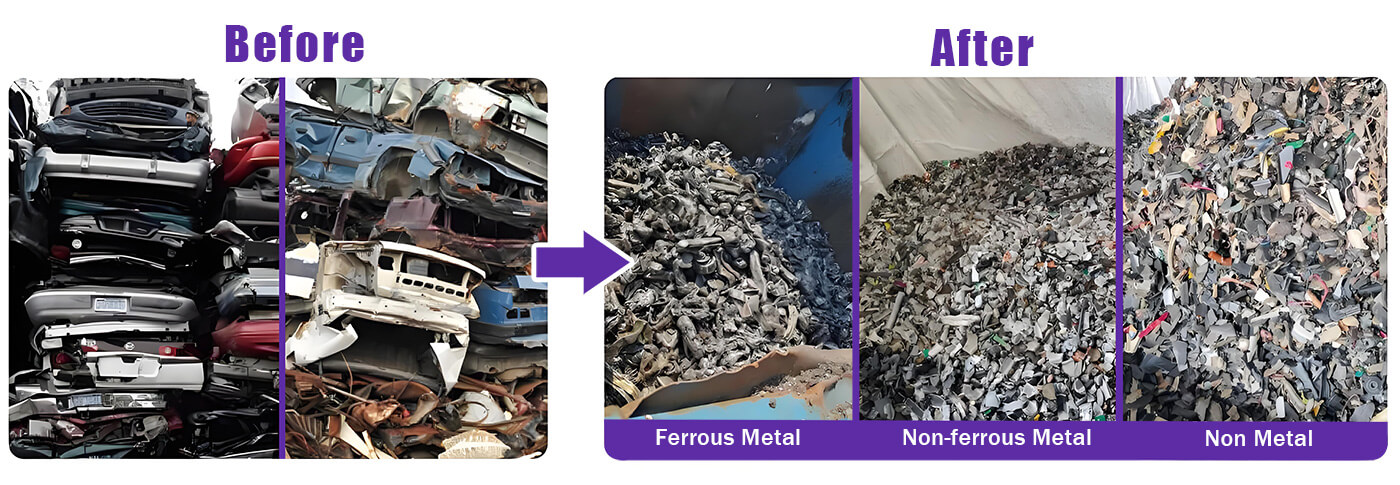
This successful trial run provides a new “mobile, intelligent, and refined” solution for the resource utilization of waste vehicles, widely applicable to diverse scenarios such as scrapped vehicle dismantling enterprises, renewable resource industrial parks, and scattered recycling stations. In the future, with the promotion and application of this equipment, it will further promote the upgrading of end-of-life vehicle recycling from “extensive dismantling” to “refined sorting”, help the efficient development of “urban mines”, and inject strong impetus into the development of circular economy and ecological environmental protection.